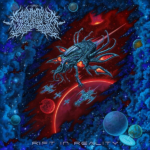

At the end of October last year, the Finnish traditional metal band Antipope released their latest album Doors of the Dead through the iconic American label Moribund Records. This is their seventh album, one that continues to drift away from their black metal roots, expanding into the realms of more classical metal genres such as heavy, doom, and progressive metal. In fact, every one of their records includes new elements, yes, they never stand still – yet it never feels like random games or reckless experimentation. Instead, the introduction of stylistic variety is so smooth and pertinent that it seems as this band had decades of experience in their chosen genre. And importantly, they still manage to remain recognizable. A rare skill these days – evolving while staying true to themselves and not betraying their roots.
Antipope was formed more than 20 years ago, and essentially this album came out in their anniversary year. The musicians clearly made every effort to create something high-quality and striking, marking this historical milestone. Lately, the gap between their albums has been about two years, so fans don’t have to wait too long, and during that time the band manages to put their full energy into crafting new masterpieces. Because the band doesn’t stand still, constantly breaking their own stylistic boundaries as they began on earlier albums, it’s not easy to compare them to anyone particular. Still, this record is clearly influenced by the legendary Iron Maiden, both stylistically and in the performance of the repertoire and instrumental passages. And more likely Iron Maiden at their peak, when enthusiasm and raw energy infused the rebellious spirit of the music, in other words, Antipope is unfamiliar with such notions as burnout or repeating themselves. Yet there’s not too much rebelliousness here; rather, restraint, deliberation, a touch of grandeur, and a conceptual approach. Together, this creates a very mature album.
The first thing you notice when listening to Doors of the Dead is its theatricality, that almost staged hypersensitivity mixed with aesthetics and drive. And of course, nostalgia surfaces throughout – something long lost, straight from the 1980s, alluring with its candour and restlessness. But there’s nothing threadbare here: Antipope pays too much attention to detail to allow the listener to drown in a retro atmosphere, dissolving instead into the purity of good old hard ’n’ heavy. The melodies are also carefully elaborated; at times the melodicism becomes tangible, pushing anything even remotely experimental into the background. So you won’t find any avant-garde quirks here, everything stays within the bounds of classic metal. Only, this “classic” spans several genres at once, while never leaving the realm of traditional heavy metal. So while the material isn’t particularly original, it can’t be called derivative, boring, or lacking authentic ideas either. It’s a talent to navigate between such opposites as conservatism and dynamism. And notably, it’s very clear how much Antipope themselves enjoy their music – with this kind of attitude and care to their art, there’s practically no chance of them running out of ideas. So there’s no doubt that in two years Antipope will once again surprise us with something new and unexpected on their next album.
The album opens with the classic heavy metal track “Magisteria”, showcasing drama and elevated emotional impact, channelling Iron Maiden in sound and melody – simple but memorable riffs, falsetto vocals, technical guitar solos, a dark atmosphere. This spirit is present throughout the album, especially since no single track really falls out of concept. “Brotherhood of Babylon” and the title track “Doors of the Dead” lean more towards heavy/doom realm – atmospheric, with acoustic inserts, calm and epic, the latter almost with an ethnic cadence. “Religion with No Name” is much jollier, nearing the borders of power metal (with faint echoes of their past, vaguely reminiscent of black metal), while “The Maker” brings sadness and grief, though not in a simple way, as its slow mournful passages are sometimes broken up by battle-like rhythms, adding another drop of epicness. “Sacrifice” leans towards progressive domain, not in terms of virtuosity, but in arrangements and compositional structure. Interestingly, the record begins with gloomy, hopeless notes and ends on an optimistic tone, hinting at hope beyond the darkness.
Doors of the Dead touches the topics of occultism and shamanism, humanity’s intergalactic future, and Greek myths. The album cover reflects these influences – its realism and mythological imagery stir listeners’ dark desires and victories, while also carrying death and destruction. Beauty and death often go hand in hand, and who better than metal musicians to notice these parallels, turning ugliness into beauty and disharmony into refinement? Or the other way around – twisting light to draw out all its grotesqueness. Reminding us once again that evolution is built on opposites, and as long as light battles darkness, there will always be life, there will always be movement. Antipope may have created a canonical, almost antique musical canvas, but they did so in a non-traditional, genre-bending way, with philosophical scepticism cast upon a modern world that, in truth, has not changed at all since ancient times – for under the mask of new technologies and pretentious tolerance, humanity is still ruled by the thirst for blood and power.

Share: