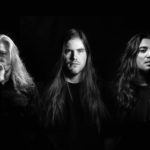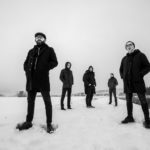

With over two decades behind them, Ukrainian black metal force DEF/LIGHT return with their fifth full-length, Stygian Conclave. Picking up where their 2025 EP Eternal Reign left off, the album dives headfirst into rebellion, philosophy, and fire – a fast and furious statement against dogma and authority. We spoke with the band about its concept, inspirations, and the journey that shaped this latest chapter.

Hi! Stygian Conclave is your fifth full-length album. How would you describe its central concept and atmosphere?
I prefer to consider it aggressive and dark. The concept is closest to the idea of rebellion against norms and traditional religious foundations. It is a classic anti-clerical album, built on a fast and furious musical line.
What lyrical or philosophical themes run throughout the album? Were there specific myths, histories, or existential ideas that inspired you?
In addition to the connections with previous albums, this work is inspired by John Milton’s Paradise Lost. This piece philosophically and ideologically coincides with the concept of the album. Some scenes we literally transfer into our songs, framing them in a modern context, while preserving the primal spirit of rebellion against heavenly power. And of course, it is also a metaphor that generally speaks about the liberation of man from snobbish prejudices or the criminal power of the church… or someone else. And in general one of my most important ideas is autonomous morality, which depends on inner self-awareness and inner reflection.
The album continues the story from your recent EP Eternal Reign. How are they connected, and what does Stygian Conclave add to that narrative?
Eternal Reign is a kind of prologue. It describes the gathering of the exiled angels and their first battle with the heavenly host. Stygian Conclave expands this story: we show the very moment of the fall, the realization that there is no way back, and the birth of independent morality in hell. If Milton’s Conclave is a council where the fate of the outcasts is decided, then for us it is a symbol of inner choice: to submit or to rebel.
Did you experiment with new elements or unexpected influences on this album that might surprise listeners?
We always try to add new details that make each work unique. But at the same time, we avoid radical experiments, so as not to lose the core of the style. This album is made in the traditions of black metal, but it has fresh shades — from philosophical lyrics to the atmosphere we create through sound and visuals.
As an international two-member project, what does your collaboration process look like today?
We have a serious musical background and huge experience. Each of us is responsible for his own part: Void is a talented composer and the one who runs the project’s marketing, and I deal with the lyrics, ideas, and the visual side. This clear division allows us to move quickly and smoothly. And in general — I have complete trust in my comrade. We respect each other and are able to adapt to each other’s abilities.
Were there particular tracks on Stygian Conclave that challenged you most — creatively, technically, or emotionally?
I wouldn’t say so. The work went quite smoothly, and the album turned out solid. Perhaps somewhere the lyrics required deep concentration, but overall the process was inspiring and strong.
In 2017 DEF/LIGHT finally transitioned into a studio project. What motivated that decision, and how has it reshaped your mission?
Firstly — my move to another country. Secondly — a certain creative crisis. I really value our concert past before 2017, but now we are focused on creating truly strong material. The approach itself has changed. It is not about people, but about a method where we use more professional approaches.
Looking back since your founding in 2001, what turning points most defined the band’s identity?
Our history is long: European tours, the tragic death and loss of musicians, conflicts with the church and law enforcement, war. Each stage left a mark. Among the things that changed us strongly was the transition from punk-death to black metal in the early 2000s. And in 2023 we discovered a new era — we decided to treat creativity as seriously and consciously as possible.
How has the Ukrainian metal scene influenced your path, and what is DEF/LIGHT’s place within it?
We are definitely part of the Ukrainian scene. We have many friends among musicians, we went through a lot together with our closest friends — the death metal band HELL:ON — and others. We are proud of our roots and feel the responsibility to represent Ukraine with dignity on the global metal map. It is an honor to be part of a scene with so many strong bands and personalities. Although ultimately we are a band striving to be on the world stage.
Ukraine has gone through turbulent times in recent years. How have these realities affected your artistic vision and personal outlook?
We do not directly transfer social or political slogans into DEF/LIGHT, but the war inevitably affects us. Our former guitarist is considered missing in action, likely dead. And in general, rage and hatred of the aggressor are part of our mindset. In side-projects we express this directly. We are grateful to and support our army (AFU). And we fundamentally do not cooperate with the aggressor country. I would like to say more and express extreme contempt for the aggressors, but this is not a political journal. I will simply say — Glory to Ukraine!

Does creating DEF/LIGHT’s music serve more as personal catharsis, or as a conscious artistic statement to the outside world?
For me it is both catharsis and statement. Music allows me to cleanse myself of inner chaos, but at the same time it is a bridge to the listener. When I share ideas through lyrics and sound, it is no longer only personal experience, but contact and communication with the listener. Personally for me this is a big and important task, an essential element of creativity, when my ideas go into the world… In this sense I hope DEF/LIGHT will bring not only self-satisfaction to the musicians, but also something to the listeners.
What spiritual, existential, or philosophical undercurrents do you feel are most strongly expressed in Stygian Conclave?
First and foremost — protest. Internal and external. It is the refusal to recognize immoral authority in any of its forms: religious, political, or cultural. It is rebellion against dictatorship and fear of false authorities. Against obscurantism and narrow-mindedness. Here we have Nietzschean self-affirmation, Sartrean freedom of choice, and the existential void, which we accept as a space for the new.
How do you integrate artwork, symbolism, and aesthetics with the music on this release?
I am responsible for the visuals, and it is an intuitive process. The atmosphere of the covers, symbolism, palette — everything must match the ideas of the album. For Stygian Conclave we chose baroque darkness, inspired by Bosch and Beksiński: gold, black, and red. It is the aesthetic of protest, fire, and darkness.
If you had to describe the emotional journey listeners go through with Stygian Conclave, how would you put it?
It is a journey through rage, protest, and destruction — towards inspiration and self-discovery. At first the listener faces chaos and pain, then — the challenge to heaven, and in the end reaches inner strength, the realization that even in the void one can find freedom.
What do you hope long-time fans will discover in this release, and what would you want new listeners to take away from it?
We evolve with each release. For old fans it is a sign of progress, new levels of music and concept. For new listeners — a chance to immerse themselves in our world and feel DEF/LIGHT.
Looking ahead, does Stygian Conclave feel like the closing of a chapter or the beginning of a new era for DEF/LIGHT?
We will definitely continue. I think it is the beginning of a new chapter. New themes, new forms and approaches will appear, but the core will remain: aggression, philosophy, and honesty.
Thank you very much for the opportunity to talk with you and with our listeners.

Share: