
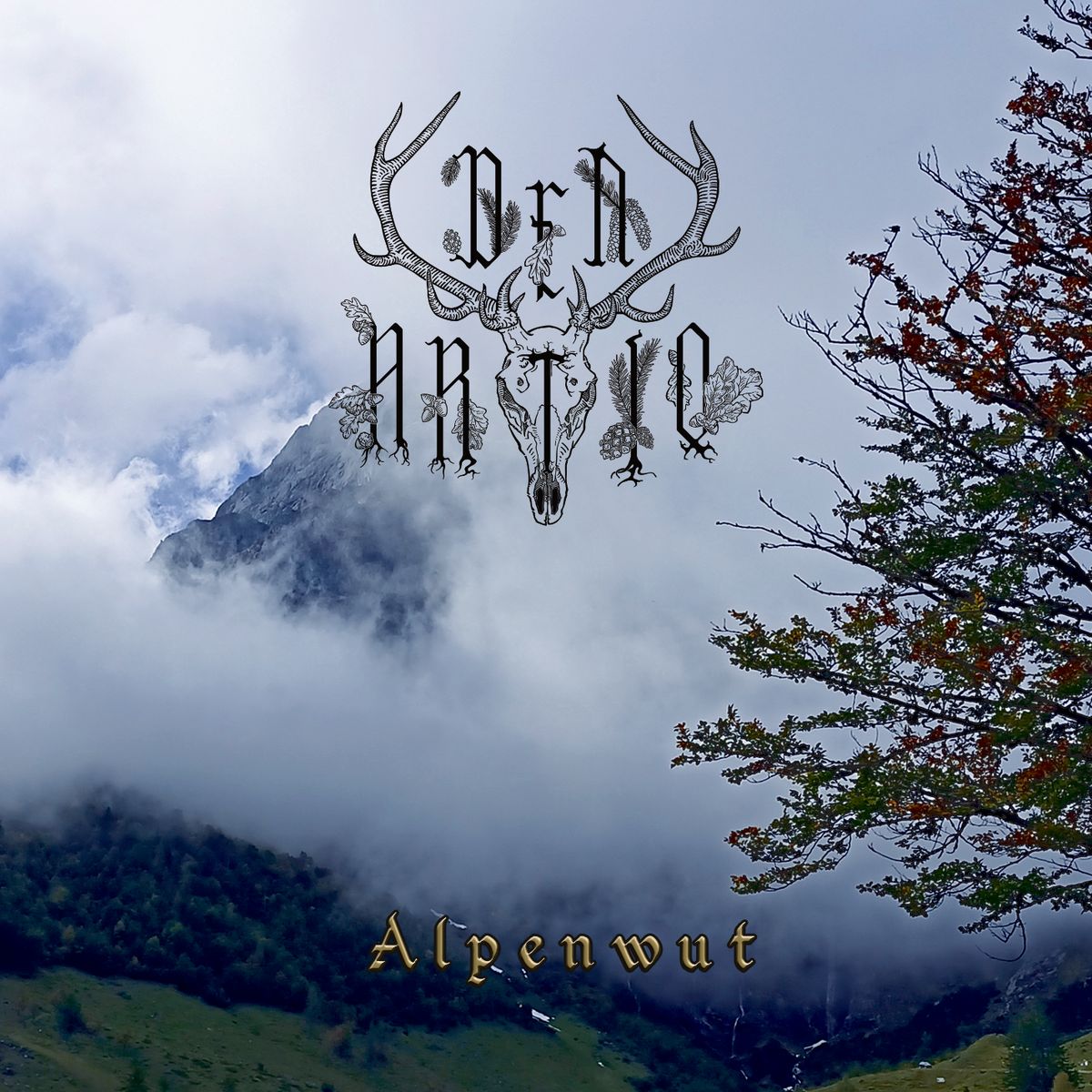
Turmoil in the Northern Limestone Alps…
I remember writing about how Dea Artio was a project brimming with lush, atmospheric soundscapes atop a black metallic backbone, with aggression and extremes being dialed back to let said ambiance shine on 2022’s Zurück in die Waldwacht, but after digging through the agitated mountainous badlands of 2026’s Alpenwut, things turn out to be quite a bit different this time.
The speed and fierceness of the barraging riff constructions on this record have been amped up to quite an extent, highlighting the more dangerous and life-loathing aspects of the mountaineering experience. The symphonic elements are quite prominent, often scaling toward the center stage above the piercing guitar patterns. I’m also hearing a rather frequent, deeper roar uttered from mastermind Kvein’s throat, taking a more death-metallic approach to bringing forth his excellent lyricism about secluded life (and its negation of societal standards) in the Alpine highlands.
Guitar action is mostly bound to more conventional rules of black metal artistry, but woven into sonic constructions that are required for such a backbone, with the symphonic grandeur easily finding its place atop the traditional approach. At first glance, this record appears much less inviting for the atmospheric/ambient-leaning type of listener compared to earlier material, as the old-school direction is a lot stronger here. I’m still not sure if I’m entirely on board with that, as Dea Artio‘s strengths lie well within the more outlandish aspects of their work, and the comparatively brutal songs don’t seem to stick with me quite as well.
At its strongest moments, Alpenwut takes cues from Limbonic Art‘s earlier material, though without being nearly as dark and gothic, in this here more nature-based variant of the genre, with the calmer sections – like the whole of “Trauer” – being more medieval-sounding and introspective, quite at home in the same ballpark as Kveldssanger was three decades earlier. Indeed, the strongest songs off this opus are actually those which are not entirely shy of retreading some of the older paths trodden on by the band, meaning that the material focusing on variations in atmosphere, a more dragging overall tempo and calmer passages act as new highlights in the Dea Artio discography, with the title track and “Des Gipfel’s Schwere Last” using said elements more elaborately to upgrade their catalog with qualities previously unmatched by the band’s earlier efforts.
Maybe Alpenwut will prove to be some kind of crossroads for Kvein’s project, perhaps a “Where to go next?” moment? I’ll certainly be here to find out.
Share: