
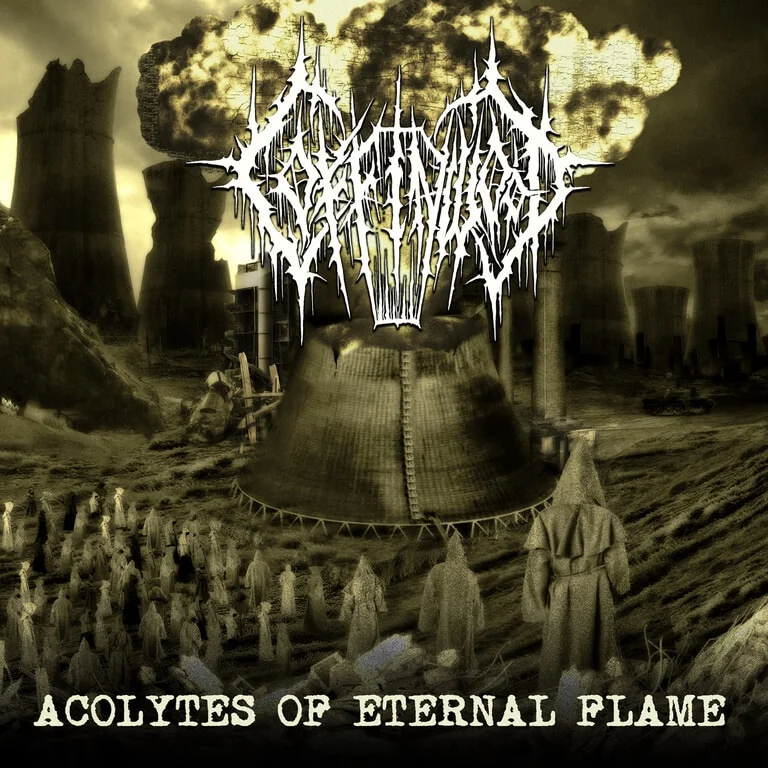
On the eve of 2024, the Warsaw-based Polish band Coffinwood independently released their debut album Acolytes of Eternal Flame, dedicating it entirely to the 1986 Chornobyl disaster. Drawing inspiration from the war metal of the 1990s, they nevertheless allow themselves to season their brutal compositions with occasional traces of refined melody. Through these low, dark vibrations, they capture the dreadful atmosphere that still lingers whenever Chornobyl is mentioned. That horror does not arise simply because it was a catastrophe, but because it was a catastrophe created by human hands.
This is Coffinwood‘s first major work. Previously, during the pandemic year of 2020, they released their debut EP Storm of Steel, focusing on the First World War. It was there that they first began shaping their brutal musical ideas, choosing a blend of black and death metal firmly rooted in military themes – not to glorify war, but to document it historically. There is an important distinction between the two. Some bands are politically engaged and openly advocate particular ideologies or actions, but Coffinwood’s music is not about politics. Here, atmosphere plays a role every bit as significant as any traditional instrument, and that is one of the main reasons why this concept album succeeds. By weaving a specific aura – in this case, the Chornobyl disaster – into the musical canvas, the album ceases to be merely another collection of songs or yet another black/death metal release among thousands of thousands. It acquires a soul, and with that soul comes an identity, allowing its individual features to stand out with remarkable clarity. Acolytes of Eternal Flame is about incarnation: the nuclear catastrophe has been woven into the music so naturally and so sincerely that it transforms the album into something far more compelling than simply another black/death release from yet another Polish band.
Coffinwood was founded in 2017 by three enthusiasts – Beherit, Trommeslager, and Kumen, clearly inspired by the Nevada horror attraction of the same name, renowned for its custom-built coffins and elaborate horror-themed decorations. Playing blackened death metal under such a name immediately reinforces the band’s nature, emphasizing the importance of everything surrounding the music: thoughtful lyrics, a fitting name, and the musicians’ image itself – a tribute to classic true black metal aesthetics. Of course, one could just as easily play black/death while dressing like hipsters and singing about constructivism. But savvy critics are always eager to attach fashionable labels such as post-black, avant-garde, or blackgaze to bands like that, even if musically they perform the most traditional form of blackened death metal imaginable. Coffinwood avoids that trap by ensuring that their visual identity reinforces exactly the same ideas expressed in their music.
One of the album’s most memorable features is the ambient introductions that open up most of the tracks. Whether it is the sound of warning sirens, a historical telephone recording from the time of the disaster, or a classic eerie horror-film intro, these elements establish the emotional framework for the songs that follow. The album feels remarkably cohesive, so its conceptual nature extends far beyond the lyrics into the music itself. Apart from these deliberately placed ambient passages, there are no moments that disrupt its internal rhythm. At the same time, it never feels like a single forty-five-minute composition. Variety is present throughout, and the songs never blur into one another – each possesses its own story and, consequently, its own emotional character. There is plenty of noise and carefully controlled chaos, yet the heaviness never becomes exhausting. The noisy aspect is not the album’s defining feature; instead, its rawness and grimy production form just one of the many layers of Acolytes of Eternal Flame, never overwhelming the listener completely. Every instrument remains clearly distinguishable, and even the lyrics are more or less understandable without constantly reaching for the booklet.
The album opens with the russian-language news announcement of “Disposition of Doom” which gradually transforms into fairly traditional death metal. In truth, most of the material leans more towards death metal than black metal, but whenever the blast beats accelerate, higher-pitched guitar lines emerge, and tremolo picking enters the battlefield, the character shifts decisively towards black metal. This is especially evident on “Salvation Through Radiation” where screaming vocals are used more prominently than the deep, resonant growls that dominate the rest of the album. The layered vocal approach is particularly impressive on “90s” (hardly surprising considering that both guitarist Kumen and bassist Beherit contributed singing parts). The title track “Acolytes of Eternal Flame” is among the album’s most melodic moments, while the crushing death/thrash assault of “Exclusion Zone” stands in complete contrast – genuine tribute to war metal. Everything concludes with “Sacrophagus” an atmospheric mid-tempo composition ending with the same bleak, hopeless ambient outro that hangs over the entire Chornobyl story – a tragedy that still contains far too many unanswered questions.
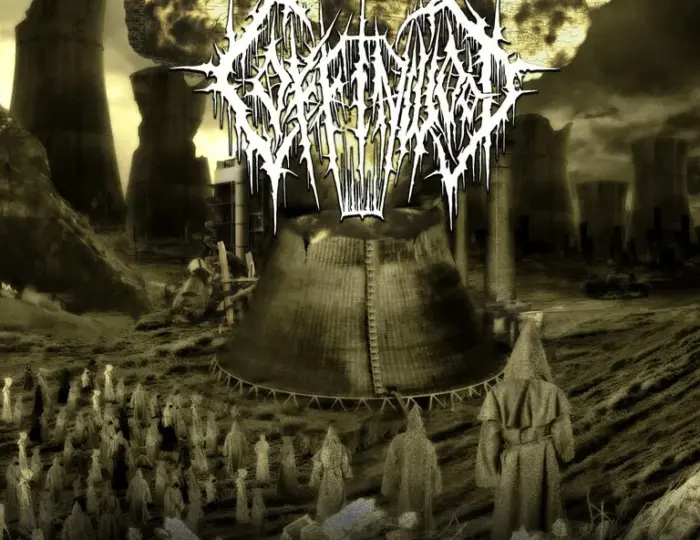
What makes this album particularly interesting is that it focuses not only on the disaster itself, but also on how it affected the lives of millions. This story has its beginning, its central event, and its long-lasting consequences. An intriguing addition is the occult imagery on the album cover: at its centre, the exploding nuclear reactor is surrounded by mysterious zealots, hinting at the unsettling possibility that the catastrophe may have been orchestrated as some form of ritual sacrifice for hidden magical purposes. One could speculate endlessly about predestination, fatalism, or secret governments, but none of that changes the fact that the explosion already happened, the radiation spread, and in doing so provided artists with an inexhaustible source of creative inspiration. Yet as long as we remember those who suffered and those who fought against its devastating consequences, perhaps such horror can be prevented from happening again.
Share: