
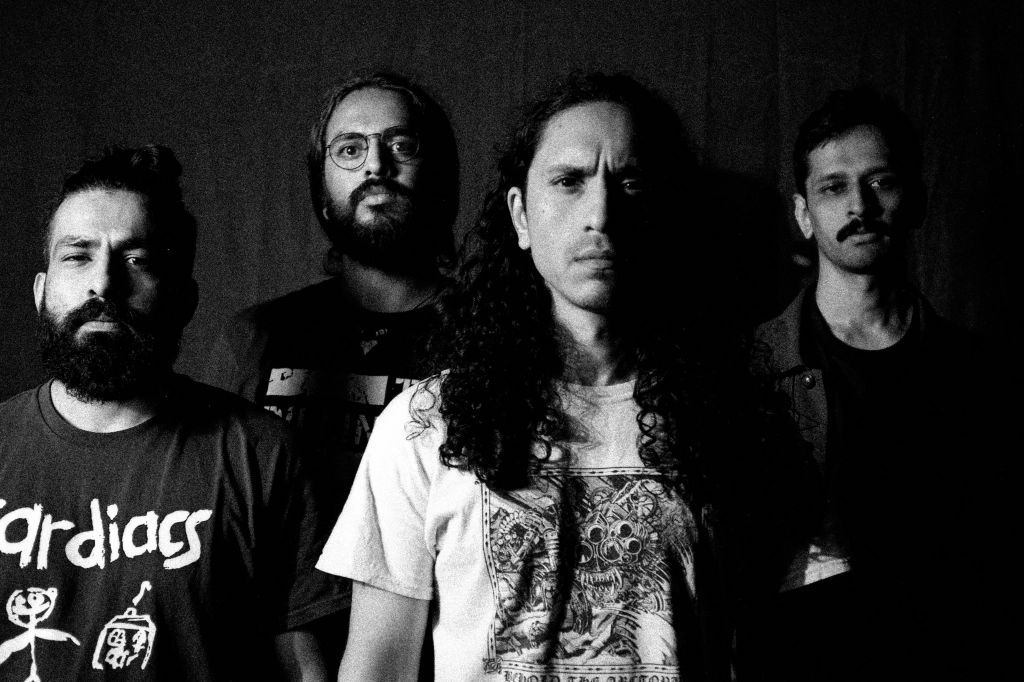

For more than a decade, Maneating Orchid have been creating some of the most chaotic and unpredictable extreme music coming out of India’s underground. With Cold Logic, the band pushes even deeper into dissonance, cosmic dread, fractured structures and suffocating intensity – refining the strange and volatile identity they’ve been building since their earliest releases. We spoke with Vinay and Kaushal about exhaustion, instability, sci-fi horror, density, and why “risk is for pop stars to worry about”.
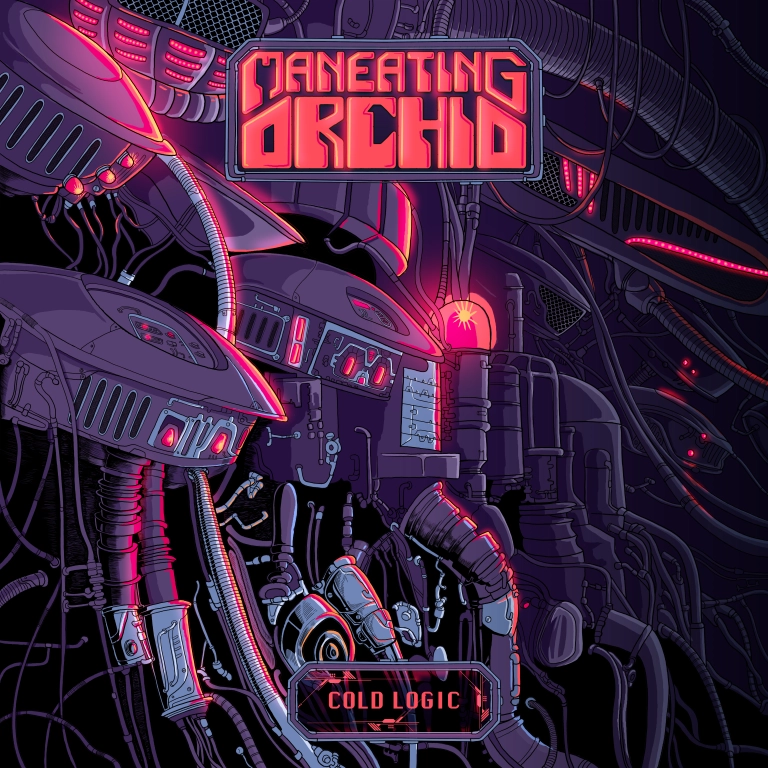
Hi! After finishing Cold Logic, what did it feel like this album had taken from you compared to previous records – mentally, creatively, or even structurally?
Vinay: We give as much of our time, effort and energy as possible to every release we ever put out, and “Cold Logic” was no different. We slogged our asses off, whether it was writing, recording, mixing/mastering, shooting videos, creating artwork, or currently even pushing the album out to attain the widest reach. All of this takes mental bandwidth, keeping our creative juices flowing and structuring it around our regular work days. It’s a continuous struggle trying to maintain the balance, but it is what it is, and we’re happy with how “Cold Logic” has shaped up.
At what point did you realize the record was becoming less about controlled complexity and more about a system that keeps destabilizing itself?
Vinay: If I understand the question correctly, I don’t think those two things are mutually exclusive. Our music is controlled and complex, but the result feels like it’s a constantly shifting system. It’s more of a cause-and-effect relationship than it is about picking one over the other. So yeah, I guess fuck shit up and then try to maintain balance.
With the shift away from socio-political themes toward cosmic dread and psychological fracture, what opened that door thematically for this album?
Kaushal: Our first EP actually heavily leaned into techno-surreal and sci-fi ideas. The two releases that followed became more socio-political and were rooted in reacting to things happening around us externally, whereas “Cold Logic” turned inward and outward at the same time. With “Cold Logic”, we found ourselves returning to that earlier fascination with cosmic dread, fractured perception, post-humanism, and existential uncertainty, just in a much deeper and more focused way. A lot of the themes came from thinking about existence on a larger scale, cosmic indifference, and the discomfort that comes from realising there may not be any inherent structure or meaning underneath everything.
How did Vishnu Reddy joining on drums change the way the band approaches tension and release inside a song?
Vinay: Vishnu understands tension and release perfectly well, considering he’s played in some fairly experimental projects before Maneating Orchid. His addition has solidified our form and songwriting even more. The tension is tight and uncomfortable, and the release is grand and satisfying.
Was there any point in the writing process where the material felt like it was resisting completion, almost refusing to settle into final form?
Vinay: Absolutely, that’s a part of writing. There were a few sections that probably didn’t feel right or whole, but you sit with it and let it brew and hope you find a way out. In one instance, I can recall the outro on “Malformed Horizon,” where the writing and arrangement took quite a toll on me and the mix engineer’s mental health. I’m joking, of course. Distancing yourself from the music helps a lot during these times because ear fatigue blurs sonic direction and gets in the way of making clear decisions.
Compared to Hive Mind and Miasma, what part of your writing identity has become more extreme over time – density, unpredictability, or emotional distance?
Vinay: I think we’ve always been a fairly unpredictable band, so that has remained the same, or it has probably become more prominent with this release. Some passages do have abrupt shifts. I also think “Cold Logic” is definitely our densest record. Some sections are claustrophobic and dissonant, which probably weren’t as much a part of our sound on the previous albums. Using the harmonium has definitely helped achieve that density.
When you think about bands like Voivod, Gorguts, or Discordance Axis in relation to your sound, what influences have become absorbed into instinct rather than consciously referenced?
Vinay: The sheer intensity of these bands, along with their clear and deliberate sense of songwriting, is what has become fairly internalised to us, especially during the writing process. With time, there is a growing conviction in our musical direction that the above influences have helped hone. You have to stand behind what you put out, and all our favourite artists do so, however absurd or simple the music may be.
The album moves through ideas of identity dissolution and post-human transformation – how do you translate something so abstract into something that still feels physically intense in music?
Kaushal: I’m really fascinated with the kinds of ideas explored in darker science fiction films and literature. Things like identity dissolution, post-human transformation, distorted perception, and cosmic insignificance are difficult to represent in a literal way, but they naturally carry a strong sense of tension and unease. Musically, we translate that through dissonance, abrupt shifts, dense layering, and sections that feel unstable or overwhelming. The goal was never to sound “technical” for the sake of it, but to create an atmosphere that feels immersive, unsettling, and physically intense in the same way those ideas feel psychologically overwhelming.
Do you see the suffocating 34-minute runtime as a constraint that sharpened the material, or as a natural endpoint of the ideas themselves?
Vinay: I think a 35 to 40-minute record is the perfect amount of time to listen to music of this intensity. It’s not a constraint by any means, but a conscious decision to keep it this way. Extra/newer ideas can always be carried into a future release.
How does your songwriting process handle repetition, given that repetition can either feel hypnotic or completely against the logic of your music?
Vinay: I think songwriting in general is a repetitive process. With time, you become more aware of ideas that are worth exploring and those that aren’t. When it comes to our music in general, repetition to the same degree is not really a thing. The sound, the parts, and our playing keep constantly changing and evolving. While we might have a signature sound, we aren’t really afraid to explore unknown territories as long as it keeps things interesting.
When you step back from Cold Logic, what part of it feels most “human” underneath all the fragmentation and dissonance?
Vinay: The very experience of the music is human underneath it all. While the album sets the scene in a distant, cold world, the feelings of discomfort, isolation and dread can very well be mapped onto the realities that we experience daily.
Looking across your discography, where does this album sit in terms of risk – was this a refinement of your language or a point where the language itself started to break? Thank you!
Vinay: This one is definitely a refinement in the sound of Maneating Orchid. Our previous releases were kind of headed in this direction, but “Cold Logic” has made it very specific and focused. Our music is generally a little bit out there and “risky,” if that’s what we want to call it. It’s not a thing we take into account at any point because we’re always going to write and play music that’s interesting to us, risky or not. Risk is for pop stars to worry about.
Pre-order/Bandcamp link: https://maneatingorchid.bandcamp.com/album/cold-logic
Instagram: https://www.instagram.com/maneatingorchid
YouTube: https://www.youtube.com/orchidtelevision
Apple Music: https://music.apple.com/in/artist/maneating-orchid/1495730532
Spotify: https://open.spotify.com/artist/6FExdyOzhM4KgbZIbT5N38
Facebook: https://www.facebook.com/maneatingorchid
Bandsintown:https://www.bandsintown.com/a/15641786-maneating-orchid
Share: