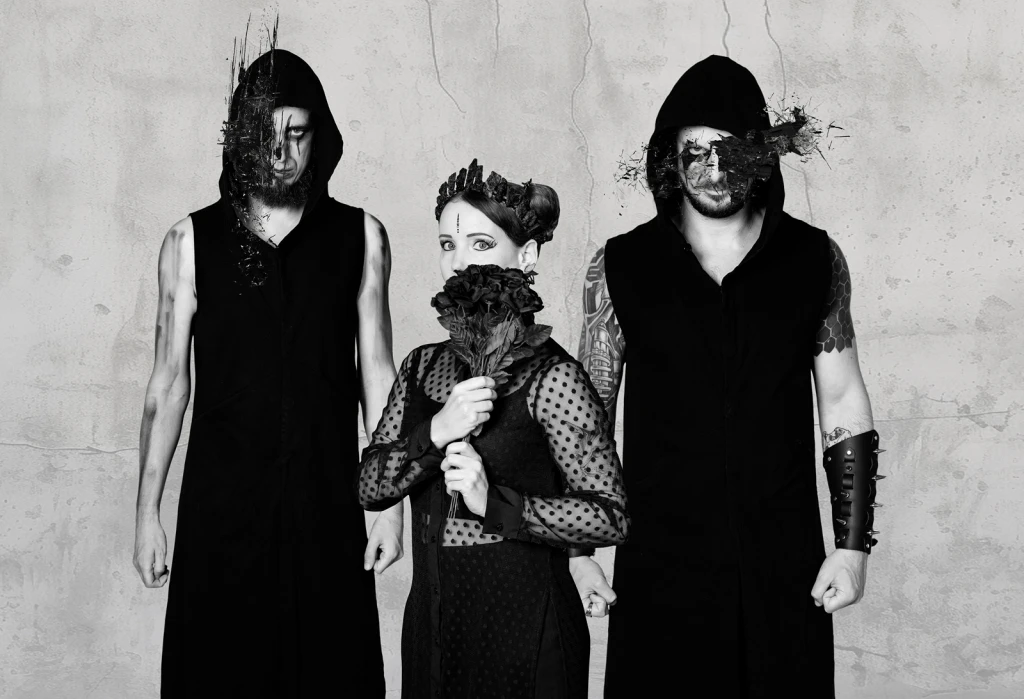

Splendidula has been carving their place in atmospheric music since 2008, but their new album Absentia arrives after a period of deep loss and upheaval. Reduced to just two original members, the band has poured grief, memory, and resilience into their most personal record yet – and spoke with us about how it all came together.

Hi! Splendidula has been around since 2008, but Absentia comes after a really heavy few years. Losing Peter Chromiak obviously changed the band. How did that loss hit you as a group?
Peter was the best friend of our former guitarist Pieter since childhood, and Pieter is also the brother-in-law of our other former guitarist, David. So they were all very closely connected, and while Peter was alive this dynamic worked perfectly. After Peter’s passing, it became too heavy for Pieter to continue with the band and constantly be reminded of his absence. For David, it also didn’t feel right to carry on under those circumstances. That left Joachim and me as the only remaining members.
We suddenly had to find three new members and even a new rehearsal space in a very short time because of upcoming shows. It was extremely rough trying to keep the band alive during a period of grief.
This album opens a new, very personal chapter for the band. When you look back at your older albums, how does Absentia feel different emotionally?
Our previous albums were sometimes partly written from personal feelings as well, but usually within a certain theme. With Absentia, the entire concept revolves around loss, which makes it our most personal album so far, with very real emotions behind it. That also gives the album much more meaning for us compared to older albums.
Guest contributions from Aaron Stainthorpe and Tim Yatras add extra layers of emotion. How did those collaborations come about?
After one of Aaron’s shows, he walked straight toward us in the venue, it felt like a meant to be moment. We started talking, and the conversation felt so natural that afterwards it made us think about asking him to appear as a guest vocalist. Another important reason was that My Dying Bride’s music was played at the funeral of our dear friend Sven. Even before Peter passed away, we already had the idea of dedicating the album to Sven.
With Tim, the connection started when a show with his band Austere was being arranged and we began talking in the process. Tim invited me to perform guest vocals live for his other band, Germ. Again it felt strangely meant to be. Just like My Dying Bride, Germ appeared more than once in Sven’s farewell playlist, and it was a band he felt deeply connected to. At that point, we simply had to ask Tim to be part of the album and help make the tribute complete.
“Echoes Of Quiet Remain” and “Kilte” are already out for airplay. Do you see those tracks as gateways into the album’s mood, or are they just a slice of a bigger picture?
They show part of the atmosphere, but the album definitely has more layers.
“Echoes Of Quiet Remain” is the song where all the different stories that shaped the album come together. It starts from old riffs that Peter wrote, Aaron’s guest vocals and the link with our friend Sven, and also includes lyrics I wrote shortly after the passing of our beloved cat, Gimli. That loss completely broke me, as he had been my support through all the difficult times, and Joachim and I (we live together) truly saw him as our child. Pieter also recites a poem in the song, as a tribute to Peter, which adds another deeply personal layer to the track.
“Kilte” is the song that best represents the direction we want to take with our music. In terms of atmosphere and genre, this is where we feel most at home. Because the lyrics were written in our own language, it also hits on a much deeper level.
Titles like “Dalkuldar” and “Donkerte” feel almost ritualistic or abstract. How do you choose your track names, and do they always tie back to the lyrics?
Mostly, our track titles tie back to the lyrics. For “Dalkuldar” it was a bit different, it was Sven’s online nickname. I wrote both the keyboard lines and the vocals myself, and it felt right to give the song that title. It also brought me back to my youth, when Sven and I used to listen a lot to atmospheric ’90s black metal albums with keyboard intros like this.
“Donkerte” also started from unfinished riffs by Peter, and he had already given it that name. A very fitting title, as it means “darkness,” the lyrics were built around that concept.
The album is called Absentia. Was that title obvious from the start, or did it only settle after the songs were finished?
The idea for the album title came after a few songs had been written. We were watching the series “Absentia” and really liked the name. Since all our album titles are in Latin, and because the name perfectly fits the album’s theme, it felt like the perfect choice.
The upcoming release show at the former Saint Eligius Church is a very fitting setting. How important was it to you to play in a venue with that kind of vibe?
The idea of doing the release show in a church had been there for years. When Sven passed away during Covid, we couldn’t attend his funeral in person and had to watch it online. Peter’s family was so broken that only close family was allowed to join the funeral. Their passing still feels surreal because we (partly) missed those final moments of goodbye. That’s why it’s important for us to organize our own event as a tribute. We’re not religious and the church is deconsecrated, but we appreciate the gesture of remembering someone in such a beautiful building.

Absentia was created after a long hiatus. Did that break change the way you write songs now, compared to Somnus or the 2024 single Behind My Semblance?
We had already started writing Absentia while Peter was still alive, so I can’t say for certain if the album would have turned out the same without what happened. The long hiatus was mostly due to the time lost from the major lineup change. Since only Joachim and I remained, it did give us the chance to move more in the direction we had always envisioned. We have always had a love for atmospheric black metal, which gradually made its way into Absentia. The songs we are currently writing continue even further in this direction, as all three of us share a strong passion for this genre.
Thematically, this record leans into grief, depression, and loss. Was it hard to put those feelings into music, or did it feel like a necessary outlet?
It was hard, and the lyrics were mostly written through tears. At the same time, it was a kind of therapy for us to translate our feelings into music. We’ve already received a lot of feedback from fans and reviewers saying that they can feel the emotions are real, which adds an extra layer of meaning to the music. We take it as a great compliment that we managed to convey our emotions in a way that feels truly genuine.
Looking back over your career, what do you want Absentia to represent in the story of Splendidula?
A new chapter in the band’s history. It represents a moment of transformation for us: dealing with loss, embracing our own musical direction, and expressing our emotions more openly than ever before. Absentia is the album where all of these experiences come together, marking a turning point both personally and creatively.
For listeners who might be approaching the album for the first time, what should they expect from the journey from start to finish? Thank you for your time!
Listeners can expect an emotional rollercoaster, a journey through all the facets of loss and grief. The album moves between moments of intense sorrow, reflection, and deep depression, taking them through the full spectrum of emotions we experienced while creating it.
Thank you as well for giving us the opportunity to share our story.
Share: