
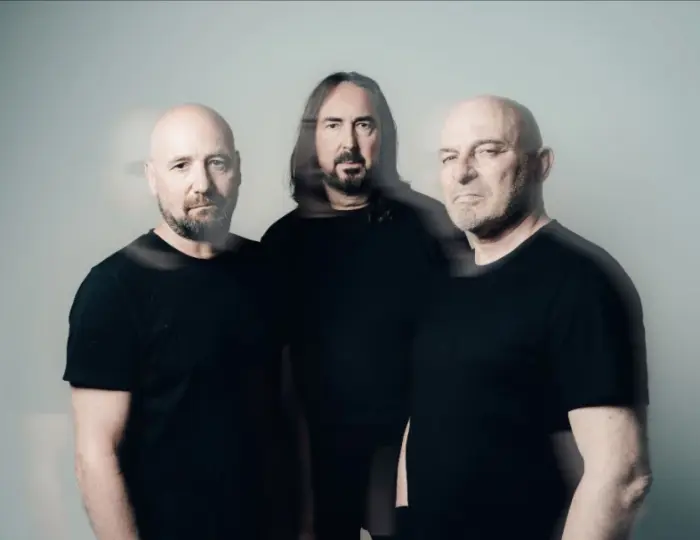

After more than three decades, Swiss technical metal pioneers Coroner are making a long-awaited return with their new studio album Dissonance Theory, set for worldwide release on October 17th, 2025 via Century Media Records. We sat down with guitarist Tommy Vetterli to talk about the band’s comeback, creative process, and what fans can expect from this next chapter.
Hi Tommy! What finally made you feel now was the right time to make another Coroner record?
It was a mix of returning to live shows and just curiosity. Being back on stage in 2011, for the first time since so many years, reminded us why we make music. After the reunion tour, we started jamming again and we felt the chemistry come back in a very authentic way. As we continued doing live shows, it became clear to us that we needed new material, so Ron and I started wondering how Coroner would sound today.
You’ve said you didn’t want to “continue a legacy” but write from the present. How do you keep that balance between who Coroner was and who you are now?
I didn’t make any plans for how the new album will sound, I just wrote freely. I think the balance happened naturally; even though I am a different person now, the new stuff might feel like a bridge between the earlier Coroner and now, just because it’s my writing.
When you were writing, did you ever catch yourself thinking, “This sounds too much like old Coroner,” and decide to push it somewhere else?
There was actually a part in one of the songs where Ron and Diego said, ‘Hey, this sounds a lot like that other track.’ I honestly hadn’t noticed it while writing. As soon as they pointed it out, I changed it and swapped that part out.
“Renewal” seems like a turning point. Did something click during that song that shaped the rest of the album?
Funnily enough, ‘Renewal’ was the first riff I came up with, but it ended up being the last song we finished. I actually had the idea for the opening riff back in 2015, but we where never completely happy with it. After we’d recorded all the other songs, I went back to it and, in a pretty short time, wrote a new verse, pre-chorus, chorus, and the whole middle part.
Dissonance Theory feels like more than just a musical term. Is there a deeper conflict or idea behind the name?
The title ‘Dissonance Theory’ isn’t really about music, even though that fits too with all the dissonant chords we use; it’s primarily about the reflections and tensions people experience when holding conflicting beliefs or values – a theme we explore throughout the whole album.
How did you decide on the running order of the tracks? What kind of journey did you want the listener to take across those 47 minutes?
The track order on an album is extremely important to me. Just like a song itself, it should have a good flow and take the listener on a journey.
Coroner has a reputation for near-surgical playing. Did you allow for more rough edges or happy accidents this time?
It was very important to me that this album had a modern sound but still carried an old-school vibe. I think we achieved that by doing multiple takes instead of just one or two in Pro Tools and then spending hours editing. We kept recording until the natural feel was right and kept the editing to a minimum.
Jens Bogren has a very distinct approach. What did he bring to these recordings that you couldn’t have done alone?
I did the recording myself here in my own studio (New Sound Studio, Pfäffikon SZ) and produced the album together with Dennis Russ. It was also planned that I would mix the album myself, but by the time the tracking was done, I was too caught up in the details and realized it wouldn’t be a good idea. I’ve worked with Jens for years for other projects, so I knew he mixes very musically and does not enforce his own sound. The recordings were already close to perfect and mostly fully produced, but Jens added that final touch that really elevated everything.
What conversations did you have with Stefan Thanneur about what the art should look like?
We wanted the artwork to symbolise the idea of humanity falling apart, which is represented by the DNA helices breaking toward the bottom. The three main DNA strands stand for the band. Ron suggested that they should look like they were made of bone and Stefan Thanneur captured the vision masterfully.
While making this album, did you feel connected to the younger version of yourself, or did it feel like working with a completely different person?
I still had all that energy and excitement, just with a bit more gray hair and experience now. Making this album was about putting that grown-up perspective into the music.
If this turned out to be the last Coroner record, would you see it as a summation of the band, or the start of another chapter? Thank you for your time!
For me, it’s definitely a new chapter, but without compromising our legacy.
https://coronermusic.lnk.to/DissonanceTheory

(photo credit: Manuel Schütz)
Share: