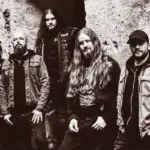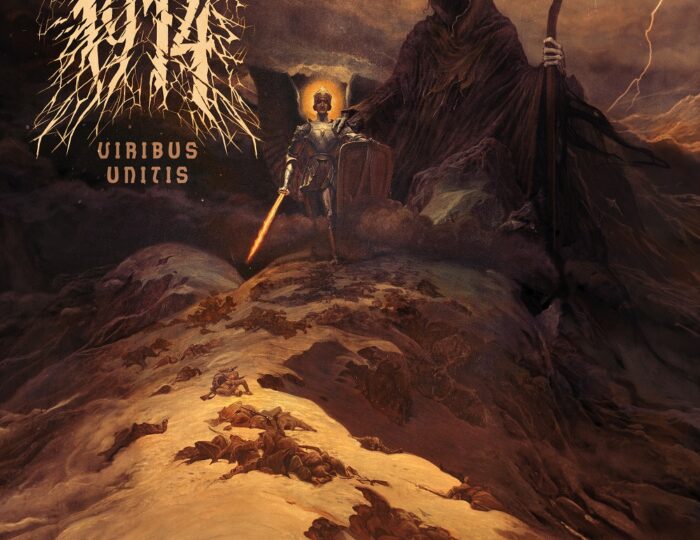


Ukrainians 1914 release their fourth album and this fact commands respect if not delight. For almost four years this country heroically fights against russian hordes, rockets onto civilians became daily routine, attempts to de-energize and freeze the country every winter – what album are we talking about? What music? It’s more about surviving. You can add a lot of cancelled tours caused by idiocy of Ukrainian Ministry of Culture, enlisted guitarist and finally Rostislav, the drummer, left the band. Many would give up and take a brake until “after the war”, if not split-up but as you can see 1914 not only found the strength to write the new album but also to outdo themselves, musically and conceptually.
Talking about the album, it is very easy to start to compare The Great War to the Ukrainian War on one hand and write a lot of historical references on the other and I am trying to handle myself to not compare and not dig deep into history, while the temptation is great.
The album Viribus Unitis (With United Forces, a personal motto of Franz Joseph, emperor of Austria, king of Hungary) tells a tragic of one man, a Ukrainian soldier in Austro-Hungarian army. That is the main difference between the conception of this album and the previous ones. Now all the horrors of war, heroism and camaraderie, desperation and the overwhelming will to survive in battle or in prison – we see it now through the eyes of Ivan, a soldier from Lviv (Lemberg). Also, the theatre of war here is Eastern; people usually not talking about and it’s criminally underrated because the numbers of losses there are really shocking.
There are 10 tracks in the album, including intro “War In” and outro “War Out”, which became a tradition and even just reading the track-list, without listening to the music, you can easily imagine the life of Ivan and geography of his displacement. The album also divided in half conceptually and musically: in the first half (1914-1917) hurricane blackened death riffs with inhuman drums create the atmosphere of the quieter battles, while on the second one (1918-1919) slow, mournful and full of despair doom/death depicts the further struggles of protagonist. However, the album sounds as a whole thing and the mood changes do not cause any dissonance. A lot of historical inserts like marches, speeches and other records also helped a lot to keep the album solid.
The opening “War In”, Austro-Hungarian empire hymn “Gott Erhalte” plunges us into the atmosphere of the beginning of the war and the next song “1914 (The Siege of Przemyśl)” throws the listener to the epicenter of the battle with brutal riffs and drums, which sound more like intense artillery shelling: endless double bass, blast beats and stunning precision. But soon the music quiets down and we can hear “the most era-appropriated breakdown” (according to youtube comments) just to get back with more intense. Dmytro Kumar spits out the lyrics like commands with his brutal growl but at the same time he manages to provide necessary emotions where they needed. And of course, the line “Jebac ruskie kurwy” here is splendid. Short and very sad fact: in this battle Ukrainians were on the both sides, Austro-Hungarian and russian.
Speaking about russian empire: almost 10-minutes tapestry “1915 (Easter Battle for the Zwinin Bridge” starts with “God Save The Tsar” (russian empire anthem) and a spit, full of contempt. Then we have another fierce riff attack, endless tremolo, double bass, Kumar rhymes “empire” and “barbed wire” and it seems like we stuck in this battle forever. But here comes the calm, pace is slowed, riff changed to blackened one and we have a moment of rest until tremolos are back with blast beats and sudden epic male choir. Ukrainian lyrics about protecting your land and mercilessness to the enemy was something I wasn’t expected. The mix of brutality, epic and sublime is fantastic.
The first single from the album, “1916 (The Südtirol Offensive)”, uses much more black metal elements, while the riffs and drums literally illustrate heavy battles and insane artillery shelling. The next track “1917 (The Isonzo Front)” starts with some Italian speech and brings back the fast-paced, raw death metal with great chorus. Nevertheless, if you listen carefully to the lyrics, you will be numbed by the numbers of losses, despite the protagonist’s bravado. “We’re crossing the Rubicon, we are unstoppable […] Isonzo front, the river of death”.
Rousing march opens the second half of Viribus Unitis and soon it is changed by drawling doom riff – that is how “1918 (Wounded In Action)” starts; another song with fine chorus. The band use pauses greatly here along with lots of cymbals. The yelling of wounded and shell-shocked soldier here simply tears you apart; this is the real sound of the war. The second song of 1918 trilogy, “POW (Prisoner of War) with Christopher Scott of Precious Death is also slow and dismal doom metal with sudden death metal bursts and emotional vocals. The illustration of a man, who desperately clinging to life but now in hell of Italian captivity among the desperate screams of other prisoners is done here perfectly; “I must survive at any price”. And the last part, “ADE (A Duty to Escape)” starts atmospherically and turns into mid-paced death metal until Aaron Stainthorpe (High Parasite, ex-My Dying Bride) starts to sing. All the grief and all the sorrow transmitted so well, it sends chills down the spine. But the most remarkable thing here is that through all the pain and the bitterness of losses we can feel the tremendous strength of Ivan, which helps him to beat the odds and get back to his family.
Well, the most poignant song here is the ending “1919 (The Home Where I Died)”: piano, barely hearable guitar, some atmospheric noises and Jérôme Reuter’s (ROME)deep vocals. Personally, it was a bit unexpected to hear the ending song in this form, especially when I remember totally devastating “The Hundred Days Offensive” or heart-wrenching “The Green Fields of France”. However, “1919” twists you inside out and tears your heart apart anyway. I could say that it is the beautiful ending of the album but there is nothing beautiful here, just the tragedy of the war that never ends. Also, the outro “War Out (The End?)” is also significant for the album: this is the first record of Ukrainian anthem, performed by Modest Mentzinsky in 1910. As I can see, this is the answer for the question “what it was all for?”
1914 have really outdone themselves with this album: if their previous works were collections of stories, Viribus Unitis is the solid book. It is possible to read the chapters of this book separately but it is better to go consistently, from the first to last, living the life of Ivan with him. The band transmit the whole specter of sentiments and struggles with their blackened death and doom: brutality and battle rage here coexist with sensibility while desperation and sorrow go with lust for life. This is the stunning album, which will give you a lot: new knowledge, emotions and when it comes to the end, you will be devastated. It will not leave you indifferent.

Viribus Unitis will be released on November, 14th via Napalm Records.
Share: