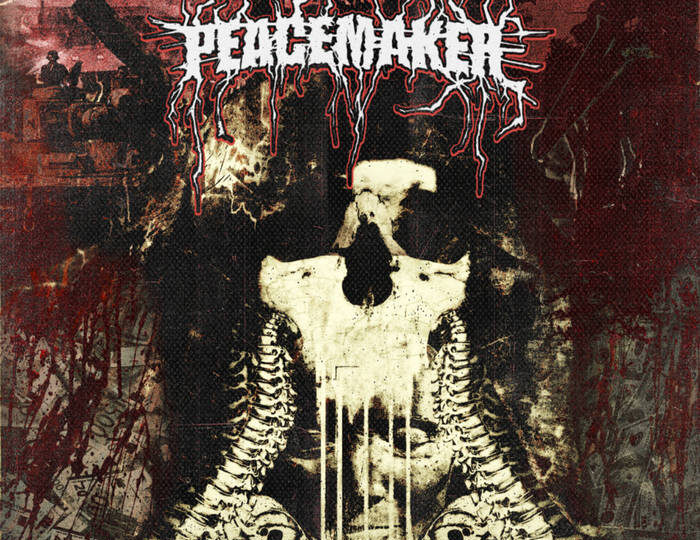

A year ago, the Polish hardcore band Peacemaker released their sophomore full-length album Internal Revolution completely independently, a staggering 23 years after their debut Different Ways of Percepting the World! In the meantime, they did throw us a few bones: the demo Brave New Day in 2005 and the single “Words of My Life” in 2017. Quite a symbolic pause, really. Over those years, countless trends have come and gone, production quality has generally improved (though that’s a debatable claim, especially among the warm-tube-sound audiophile crowd), and competition has only grown fiercer. But despite all that, no truly new styles have emerged, unless you count hybrids.
Peacemaker, by the way, aren’t stylistically tied to any single genre either. They weave into their sound not only modern hardcore, but also death and sludge metal, grindcore, crossover thrash, and punk rock. So, they haven’t been standing still; they’ve evolved along with the modern times. Yet Internal Revolution in some ways still reeks pleasantly of old-school attitude.
The band formed way back in 1998, in the small Polish town of Rawicz, in the historic Greater Poland region, it was last century, literally. And that was the prime of Poland’s black/death metal cult, which later grew into a full-blown phenomenon. And though Peacemaker didn’t completely ignore that trend, their inspiration lies more in hardcore roots laced with political weight, fused with modern thrash/groove and its raw, primitive straightforwardness – all seasoned with a sludgy doom thickness. The focus here is on simplicity of melody, an aggressive vocal delivery (more shout-speak than any kind of melodic singing), and the catchiness of the riffs and chords.
These musicians lean toward minimalism rather than complexity, yet they sometimes slip in elements that border on progressive territory. Still, the songs are short, and since they cram a lot into each one, they end up sounding diverse and vital, never monotonous or trance-like. You never get the feeling you’ve been listening to one droning song for half an hour (the album actually runs under 29 minutes).
They play with fury and intent, not through chaotic bursts or weird experimental detours. Internal Revolution has the soul of punk, the mind of an aggressive hardcore fighter, and the body of a seasoned doomster. It’s amazing how they managed to pull this off without invoking the “avant-garde innovation” card.
The album opens strong – “(We Come) From Nowhere” sets the pace with its punk-soaked energy, oscillating between death/thrash and a faint sludge haze. “99 Thousand of Lies” straddles the line between doom/sludge sluggishness and savage groove drive, while “Hate Crosses Borders” goes deeper into doom territory – slow, raw, dirty, full of swampy low-end vibrations, yet riding a steady, almost nu-metal rhythm. Melody isn’t abundant here, but it’s smartly placed, enough to make certain, the most catchy riffs stick in your head. “Stay Human” features singer Brass from Bloodstained on guest vocals, and the track is straight hardcore – no punk/thrash chaos, just slower, heavier, more deliberate pounding. The closing guitar solo even hints at a touch of arranged technicality. “Today Is the Day” keeps a steady pace and melodic choruses, slipping in slower passages that bring back that early 90s death metal heaviness. The title track “Internal Revolution” has a southern-tinged vibe, slightly dissonant and primitive by design, but its simplicity giving a rough charm.
Yet none of these songs rely on a single riff as their backbone – though those riffs are indeed the main source of melody and memorability. Jankes’s voice acts as an additional catalyst of energy, saturating the album with emotions – rage, hatred, resistance, even though he doesn’t employ any hysterical or experimental vocal tricks, just a consistent, raw shout. There’s also that faint political tint, reflecting the modern world’s chaos.
Coming back from the void after so many years of silence isn’t easy. That kind of comeback is usually forgiven only to overhyped legends, regardless of talent or mediocrity. So for Peacemaker, spreading their vision through the music underground is twice the challenge. The result is an emotionally charged and dynamic album, professionally mature yet glowing with a kind of bright, youthful mischief. It grips you not just with its unyielding straightforwardness, but also with its bare, honest sincerity. And that’s not childish naivety – it’s more like an attempt to turn the absurd political chaos of the 21st century into some twisted, rebellious game.

Share: