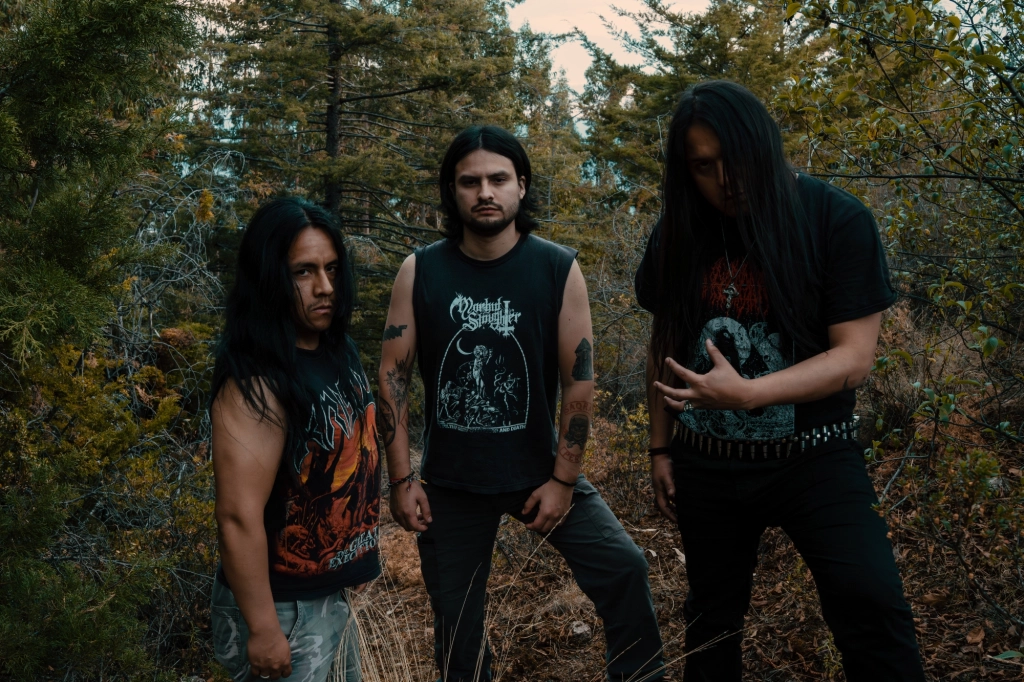
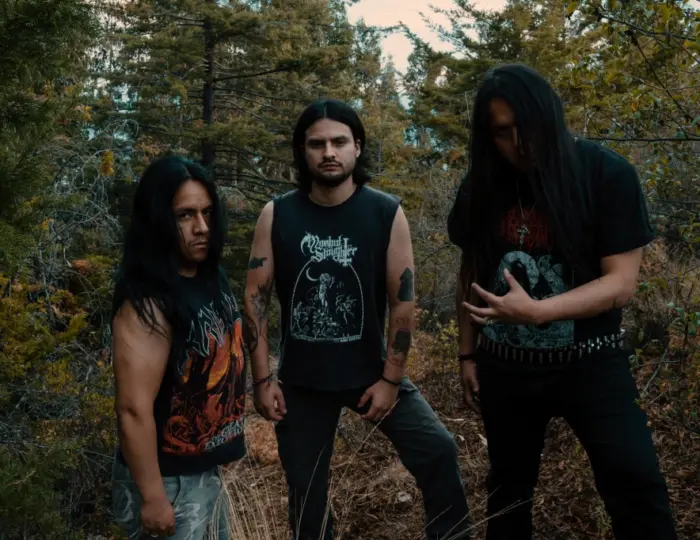

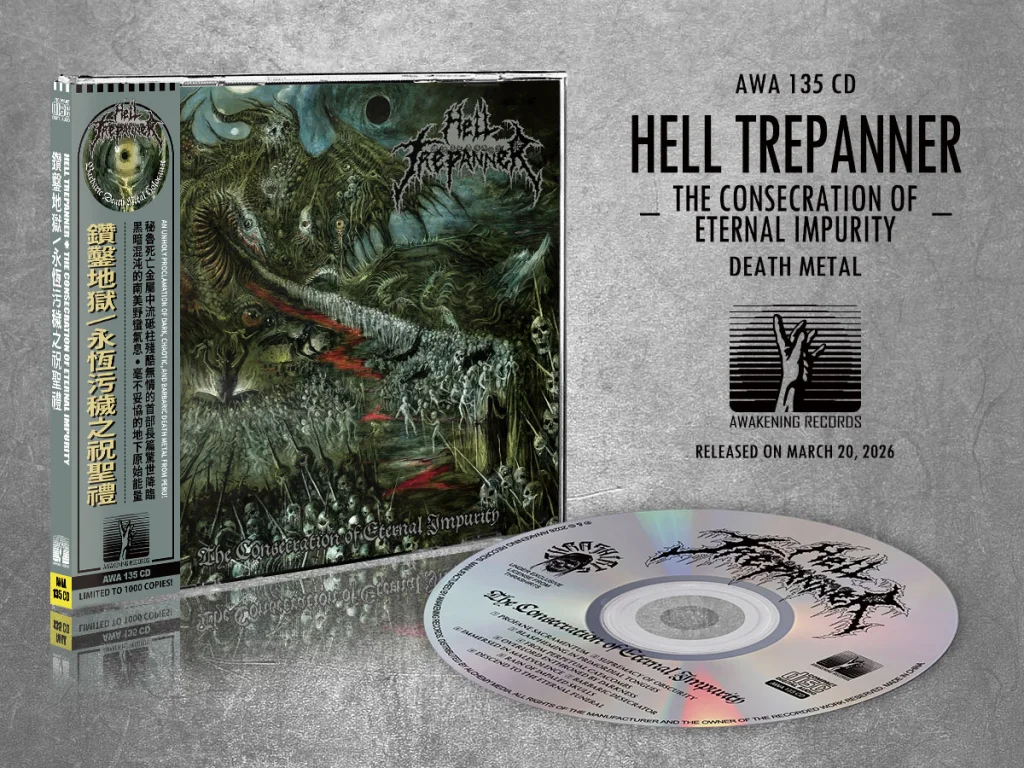
Peru’s HELL TREPANNER aren’t interested in modernizing death metal or polishing its edges. Since their formation, the band has remained devoted to the raw violence, chaos, and rotten atmosphere of the old underground, drawing equally from South American extremity and the early death metal cult. Their debut full-length The Consecration of Eternal Impurity sounds filthy, oppressive, and completely detached from modern sterile production trends, balancing savage speed with doomed heaviness and genuine underground spirit. I spoke with the band about South American death metal, controlled chaos, authenticity, and why they believe death metal should remain ugly, dangerous, and uncompromising.
Hi! HELL TREPANNER has been around since 2015, but the band never moved toward cleaner or more modern death metal. Was that rejection there from day one?
Greetings to all the demons reading this and getting to know Hell Trepanner. The band officially forged in 2015, but we had been bleeding the first rehearsals and writing material since 2012. From day one, the vision was clear: replicate the iron style of our cult influences. Back then, we blasted old Sepultura, old Slayer, Sarcófago, and the like.
By 2015, more hardened and concrete, the sound naturally evolved, sinking deeper into pure Death Metal. We drew from Morbid Angel, Entombed, and South American forces like Mortem, Mystifier, and Atomic Aggressor.
The devotion to ancient, orthodox underground metal was always there. We kept it raw to avoid any modern, sterile, or clean garbage. We stay loyal to the putrid essence of the bands that spawned us.
This album sounds filthy even compared to most newer old school death metal bands. Where did that atmosphere come from?
Thanks for the compliment. This result is the direct consequence of the constant grind and preparation we poured into this project. Some of these riffs actually trace back to our demo and EP era—ancient ideas that we hammered into shape over time, combined with recent, newer concepts to forge the dynamics of this album.
However, we are still far from reaching the absolute prime of the sound we demand. Because of that, we are already working on new material to keep crushing skulls with more pure Death Metal.
A lot of modern death metal sounds too controlled now. The Consecration of Eternal Impurity feels much more violent and loose. Do you think death metal loses something once everything becomes too perfect?
Exactly. When a recording gets too polished, it completely kills that sonic filth that makes the darkest bands unique. We are always striking a balance between the sound and the songwriting. If a riff feels too modern and lacks that ancient stench, we kill it, bury it, and rework it until it hits the mark.
The opposite happens too: you can have the perfect tracks, but the production comes out looking too clean. To prevent that, we balanced everything from the recording session down to the mixing and mastering. For this album, everything was tracked genuinely and professionally—locked in the studio, plugging straight into the amplifiers. No digital interfaces, no software effects during tracking. Everything was organic, raw, and direct.
The slower riffs on this album hit harder than most blastbeat parts coming from newer bands now. Do you think people forgot that heaviness and speed are not the same thing?
That depends on each band. Some feel that nothing but sheer speed and brutality satisfies them, but what really defines us are those slow, suffocating passages—those doomed sections, as I call them. Those parts are a literal descent into the abyss.
Those dragging, heavy riffs come straight from our devotion to Black Sabbath and early doom bands. For us, commanding a wider arsenal of ideas that bleed directly into the core foundation of death metal is exactly what marks our sound.
The guitar sound is dirty as hell here – almost collapsing in some parts, especially on “From Perpetual Catacombs”. Was the recording process chaotic too, or did everything come together naturally?
Everything flowed naturally. Curiously, that track was spawned back in 2018, so it was already deeply hammered during rehearsals. Once in the recording process, there were no setbacks other than the usual friction of the studio. As for the solos, those were tracked in a separate session, where guitarist Neil Destruktor poured in the cold, precise preparation they required.
Peru always had a rougher and uglier underground sound than most European scenes. You can still hear that on this album. Do bands there even care about sounding “professional” (fuck that)?
I am proud to rot in this part of the world; I am entirely bound to the South American style. However, it is inevitable to look at the other side of the map, like Europe, where the scene is massive and the entire circuit is violently active. Seeing bands drop material every single day is remarkable. I assume they have their own internal plagues too, but my point is this: we watch what they do over there, and they watch what we execute here. That dilemma stems from a mindset where people look outside as if it were superior, and many times, it simply is not.
The local forces that infected us are a select few: Mortem, Hadez, and Anal Vomit. It is precisely those names that somehow remain standing and active. There is a strong batch of bands forging true death metal here, but most get buried at the demo stage, or at best, an EP. This side of the world breeds a highly distinct, hostile style, but whether due to lack of resources, time, or just passing trends, very few bands ever manage to unleash an official full-length debut or maintain a constant, unyielding attack.
Don’t mistake this for arrogance, and I don’t feel superior just because we unleashed our debut full-length. The truth is, I want all those bands to drag their productions into the light. The musical legacy of Peruvian death metal needs to circulate and infect every single continent.
A lot of bands today are obsessed with “evolving” death metal. HELL TREPANNER sounds more interested in making it darker and heavier instead. What’s your view on all this constant reinvention?
I don’t quite understand what kind of evolution you are talking about. As far as the genre is concerned, there is absolutely nothing to evolve and nothing left to create. Our purpose is to guard that exact same essence. There is always room to forge new riffs and sharpen techniques, but everything must remain chained to the established foundations. And of course, there is always room to make it darker, rawer, and more brutal.
Even the fast parts on this record don’t sound flashy or technical for the sake of it. Do you think too many death metal musicians are trying to impress other musicians now?
I suppose so. There are musicians who thrive on impeccable technique and perfect execution, delivering breathtaking solos, and that’s their path. For us, it’s always been about what arises naturally: creating dark and gloomy passages. A composition might sound incredibly demonic and perfect, frightening, and you only use two or three notes—I don’t care, as long as I experience that chilling sensation it conveys without needing to be hyper-technical or meticulous, but rather executing everything with absolute coherence and devotion to this dark art.
Members of HELL TREPANNER have been involved in a lot of underground bands already. Does being active in a real local scene change the mentality of a band?
Over here, the movement for pure extreme metal is minimal. The scene is dominated by mixed-genre shows and especially foreign bands touring through, which always draw crowds. However, you rarely see Peruvian bands touring abroad. Because of that, each of us fights from our own trenches, doing whatever it takes to keep this alive and, if possible, force it to grow.
How much chaos do you actually want inside this kind of music? A maximum? =)
I demand chaos, but I want it controlled. It needs to strike a balance to avoid sterile saturation or falling into monotony.
The album feels more hateful than occult or fantasy-based. Where does that darkness come from for you personally?
For me, darkness crawls straight out of my own fears and personal horrors. I don’t claim to be a scholar, nor do I care to forge overproduced lyrics or use sophisticated words just to sound clever. I strictly demand to be as raw and real as possible, locking into what the sickening riffs of this album transmit to me. That is what helped me unleash sincere concepts, heavily injected with classic horror cinema, Lovecraftian literature, and some paranormal experiences.
That is the lyrical foundation, which paired with the instrumental compositions, allowed us to execute this devastating work we are completely satisfied with.
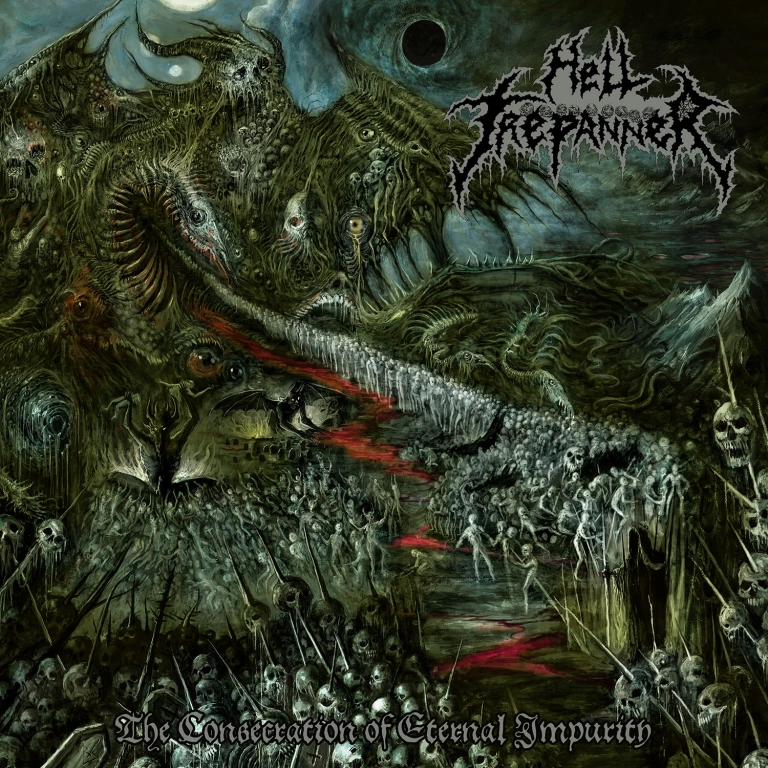
The artwork fits the album perfectly because it looks rotten and real instead of digital and overdesigned. Were you tired of seeing too many modern metal covers looking artificial?
To stay true to our personal standards, we opted for authenticity. We contacted a longtime collaborator, Artem Astaroth, with whom we had previously worked and were completely satisfied. This time was no exception; under our direction, he created a striking oil painting on canvas that perfectly complements the album’s concept.
A lot of newer “old school” death metal feels nostalgic or even comfortable now. HELL TREPANNER doesn’t really sound nostalgic at all. Do you still see death metal as dangerous music?
Music is art, and art must be entirely free to express itself. There are tastes for everyone. Those who remain loyal or bleed into this genre must understand that no one owns the absolute truth, and no one should dictate their thoughts or decisions. In the end, this is art—just like a horror book or a slasher movie. To be honest, there is far more actual danger crawling in the streets of my city than inside a death metal show.
Looking at the scene today, what kills death metal faster – fake underground attitude, overproduction, or bands treating everything like business? Thank you!
Aside from the three options you mention, the absolute core issue for me is the commitment and consistency each band delivers. I don’t know their motives, nor do I care; everyone has their own reality and plagues to deal with. But if there were actual consistency, and the existing bands dragged their productions into the light, only then could we discuss those other points. Meanwhile, that remains the root problem. As for us, we expect to keep forging malevolent music in honor of the ancient cult, strengthening and expanding this infernal noise across every single continent.
https://helltrepanner.bandcamp.com
Share: