
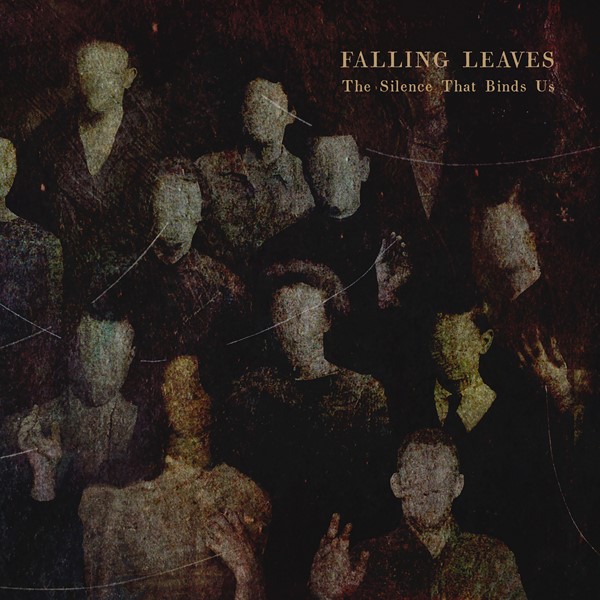
Formed in 2009, Falling Leaves have carved a unique path in melodic death/doom, blending heavy melancholy with an emotional depth inspired by icons like My Dying Bride and Novembers Doom. Now, after more than a decade since their acclaimed debut, the band returns with The Silence That Binds Us – a mature, emotionally charged work mixed by Alessandro Comerio and mastered by Dan Swanö.
After more than a decade, what emotions define the return of Falling Leaves with The Silence That Binds Us?
Ala’a Swalha – It’s been quite a journey. Our last album came out back in 2012, and since then a lot has changed. I moved from Amman, Jordan to Dubai and started a new life, which meant being away from the original band members. Some moved on, others traveled abroad, and for a while it was hard to keep the band alive. But the dream of Falling Leaves never faded. I kept talking with Murad, and eventually we found new musicians in Dubai to rebuild the band. So the emotions now are a mix of nostalgia, fulfillment, and pride it feels like coming full circle and finally giving life to something that’s been inside us all these years.
What does “silence” symbolize in relation to the band’s journey and these songs?
Murad Juneydi – For us, silence is the space between words, the weight of things left unsaid. In our journey as a band, it symbolizes both struggle and connection, the hardships we carried together, and the unspoken bond that holds us. The trilogy of songs shows how silence evolves: from calm, to grief, to regret, but it always binds us to our story.
How do the lyrics reflect your evolution since Mournful Cry of a Dying Sun, and what new perspectives does Murad Juneydi bring?
Ala’a Swalha – Back on Mournful Cry of a Dying Sun, the lyrics were shared between Murad and Wasim, so they reflected two different voices. This time, Murad wrote all the lyrics, which gave the album a stronger sense of unity and vision. He has matured a lot as a lyricist his words carry more weight, more poetry, and more vulnerability. The lyrics now reflect not just youthful sorrow like before, but also the wisdom and scars we’ve gained through life’s struggles.
Compared to your 2012 debut, how would you describe the sonic and emotional growth of Falling Leaves on this record?
Ala’a Swalha – The growth has been tremendous. On the debut, I wrote everything myself, and while it was honest, it was also limited. This time we had incredible musicians bringing their own perspectives. Fadi, our guitarist, added solos and melodies that expanded the songs, while Ali on bass gave the music a lot more depth. Bashar, our vocalist, is a great singer with a lot of experience, and his presence really elevated the emotional range of this album he helped shape the atmosphere with his voice and gave new life to the lyrics. Ariel is a very talented keyboardist; even though he’s in another continent, from the very first moment he understood exactly what I wanted, as if we had been playing together for years. And Fabio is an amazing drummer who plays all kinds of genres that versatility gave the album the heavier and more dynamic drum lines I always wished we could achieve back in 2012.
Emotionally, the album feels heavier and more fragile at the same time more dynamic, more layered, and closer to the sound we always dreamed of.
Once again you’ve worked with Paul Kuhr. What makes his presence so meaningful to Falling Leaves?
Ala’a Swalha – Paul has been a true friend to us since the early days. Back in 2012, we were just a new band reaching out to vocalists, and many never replied. But Paul answered immediately, supported us, and even agreed to collaborate on our debut. His name gave us credibility, but more importantly, his sincerity and guidance gave us confidence. We learned a lot from him about how to approach vocals and structure lyrics. For this album, we didn’t even consider anyone else Paul was the natural choice. Beyond being an incredible singer, he’s an amazing human being, and his voice feels like part of the Falling Leaves family.
What lessons from past studio experiences shaped how you approached the recording of this album?
Ala’a Swalha – Recording the first album was a real struggle. Our ex-drummer didn’t have his own kit, so we used to borrow time in a church where he was playing, just to finish the drum lines. As a band, we even took a handy job painting a house so we could save enough money to finally buy our own drum kit. We were students with no resources, relying on whatever space and equipment we could get.
After finally recording the songs, I started contacting studios for mixing and mastering. At that time, there weren’t really studios in Jordan that specialized in metal (and I’m not sure there are today either). I even reached out to Dan Swanö back then, but we couldn’t afford his work. We asked for a discount, and he jokingly told me to sell cookies in the mall to raise the money 🤣. I never reminded him of this story later, but it stayed with me.
Those experiences taught us resilience and showed us the limits of what we could achieve without proper support. This time, things were very different. We had the maturity and means to do it right better studios, proper instruments, and the incredible team of Alessandro Comerio for mixing and Dan Swanö himself for mastering. The biggest lesson we carried with us was patience and preparation: instead of rushing or compromising, we gave every detail the attention it deserved, and that’s what made the difference in this record.
Which track carries the deepest personal meaning for you, and what story does it tell?
Ala’a Swalha – Every track is personal, but Re-Silence III carries the deepest meaning for me. It’s directly connected to Silence and Silence Again, and together they hold many memories from our early years. For me, Re-Silence III feels like the continuation of that story it bridges the past and present of Falling Leaves. It also features my favorite solo, which makes it even more special. Both songs, Silence and Silence Again and Re-Silence III, reflect the emotional core of this band.
How do you see Falling Leaves fitting into the lineage of doom/death metal alongside bands like My Dying Bride and Novembers Doom?
Ala’a Swalha – Those bands are inspirations to us, no doubt, but we never wanted to be a copy of anyone. We see Falling Leaves as carrying the same spirit melancholic, emotional, and heavy but with our own identity rooted in our personal stories and background. If bands like My Dying Bride and Novembers Doom are pillars of the genre, then we hope to be one of the voices keeping that tradition alive while adding our own perspective.
When you reflect on Mournful Cry of a Dying Sun today, what role does it play in shaping who you are now?
Ala’a Swalha – That album was our first step, our proof that we could turn emotions into music. Listening to it now, I hear both the rawness and the heart. But it also carries a very difficult memory. After its release in 2012, our label Endless Winter arranged 5 concerts across Russia for us. Everything seemed perfect the band got visas through the embassy, I applied for a tourist visa from Dubai, and I was already there waiting for them. Then came the devastating news: at Moscow airport, the rest of the band was taken into custody because the invitations from the label were issued in an outdated format. It was a mistake by the label and the embassy, but we paid the price. They were sent back, and all the concerts were cancelled except one in Moscow, where I managed to play a single song as a guest with members of another band, Funeral.
That moment was a dramatic turning point. After working so hard with limited resources to create our debut, to then face this crushing disappointment, some of the members lost their drive. It was heartbreaking, but it also shaped me it taught me how fragile this path can be, and how much resilience it takes to keep a dream alive. Without that painful experience, I wouldn’t have had the strength to push Falling Leaves forward into what it has become today.
Doom/death has evolved a lot since 2012 – where do you feel Falling Leaves fits within today’s scene?
Ala’a Swalha – The genre has definitely expanded, with new influences and fresh takes. Falling Leaves fits as part of the old-school tradition of atmospheric doom/death, but with modern production and a renewed energy. We’re not trying to reinvent the wheel we’re trying to carry the flame with honesty and sincerity.
What emotional experience do you hope listeners take away from The Silence That Binds Us?
Ala’a Swalha – We hope listeners feel less alone. This album is heavy, dark, and emotional, but it also carries hope. If even one listener finds comfort in knowing that someone else has felt the same struggles, then we’ve achieved what we set out to do.
How has the band’s creative chemistry changed since your earliest days together?
Ala’a Swalha – In the early days, everything came from me alone. Now it’s a collective effort. Each member brings their own experiences, styles, and influences, and that makes the music richer. The chemistry is built on trust everyone contributes, and we all share the same vision.
Beyond music, what kept the spirit of Falling Leaves alive during the long gap between records?
Ala’a Swalha – Friendship and belief. Even when things were difficult, the bond between us especially with Murad kept the idea of Falling Leaves alive. We always knew we weren’t done, that one day we’d return. That belief carried us through the silence.
What do you hope The Silence That Binds Us will mean to both longtime fans and new listeners discovering you for the first time?
Ala’a Swalha – As I said before, the long gap cost us many of our old fans. But after announcing that a new album was finally coming, and sharing some behind-the-scenes footage along with the first song We Are Alone, I was overwhelmed by the positive feedback. We received so much support, not only from old fans who were happy to see us back, but also from many new listeners discovering us for the first time. My hope is that The Silence That Binds Us continues to reconnect us with those who were there from the beginning, while also welcoming a new generation of people who can find meaning in our music.
With this silence now broken, can fans expect more frequent releases, or was this album a rare statement born of its own timing?
Ala’a Swalha – For sure, in the coming months my focus will be on bringing the band on stage for some concerts. At the same time, I also plan to re-record our 2012 album Mournful Cry of a Dying Sun. It’s still not officially confirmed and this is the first time I’m mentioning it but it’s definitely part of the plan. The silence is broken, and Falling Leaves is alive again. We won’t let another decade pass in between albums.
I really enjoyed this interview it brought back a lot of memories, some beautiful and some painful, but all part of our story. Thank you so much for having me and for giving Falling Leaves the chance to share our journey.
Share: