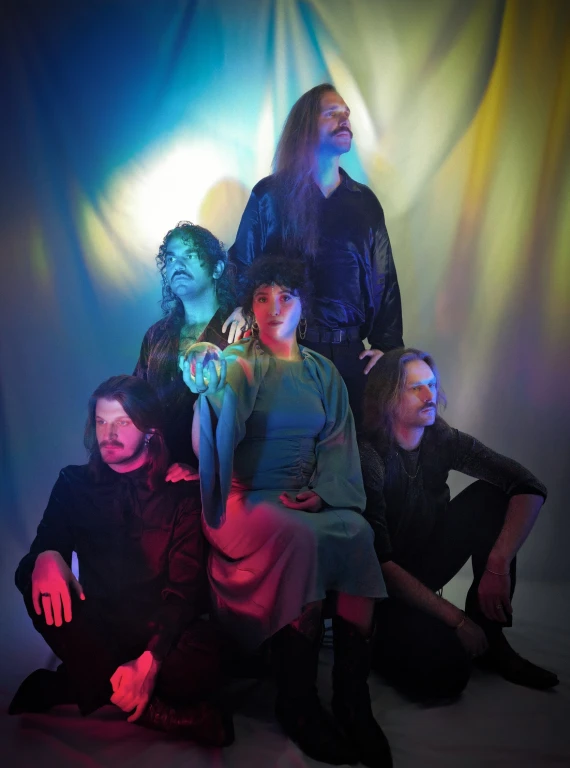

Lynx return with Trinity of Suns, a new chapter shaped by change, experimentation, and a live-in-the-studio approach. We spoke with the band about the energy behind the recordings, evolving their sound, and the ideas driving the new album.

Hello! You recorded “Trinity of Suns” live in the studio. What made you want to do it that way, and what did it bring out in the band?
We consciously decided to record the new album live because authenticity is at the heart of what we do. The energy in the room when we’re all playing together is something you just can’t replicate by tracking each part alone. And since we have such a strong emotional connection to every song, capturing that feeling live felt like the most natural way to bring people along on this journey with us.
I’ve only heard Oppressive Season so far. What kind of feeling or mood were you aiming for on “Trinity of Suns”?
Trinity of Suns is meant to be a journey through time and space—a ride alongside our protagonist, the lynx, as he embarks on his adventures. These adventures are deeply ambivalent as he experiences both strength and loss. He is alone and stranded, yet still hopeful. In many ways, the album mirrors what we as individuals in the band have faced in our personal lives only translated into different spheres and woven into a larger, mythic narrative. The lynx became a symbol for us: resilient, solitary, but always moving forward.
On Oppressive Season, the layers feel really full. Did that happen by planning or by jamming together in the studio?
With Oppressive Season, the instrumental parts were all planned out beforehand. That was intentional from the very beginning. The vocal harmonies, on the other hand, were only loosely sketched. For the most part, they came together spontaneously in the moment. The high choir-like harmony on the final chorus, in particular, was completely improvised by Amy while we were recording.
When writing new songs, do you think more about keeping your old style or trying new things?
A little bit of both, actually. The instrumental sound on Trinity of Suns is very much in line with Watcher of Skies, they share a similar foundation. But it’s really the details that make the difference. This time around, we had a lot of fun experimenting with the vocal melodies and embracing more progressive elements. It felt like a natural way to evolve while staying true to our sound.
You’re releasing this on vinyl as well. Does thinking about that affect the way you play or record?
Not really, to be honest. Releasing on vinyl was never even a question for us since we’re all huge music enthusiasts, so it just felt like the natural thing to do. It also reinforces the connection we have to 70s music, which has always been a big part of our sound. Vinyl feels like the perfect format to honor that influence.
With Amy and Janni joining, how has the way you write songs changed?
Amy comes from more of a pop, soul, and R&B background, and she brought that whole different energy to the vocal melodies. We really wanted to write in a way that lets her voice shine – playing to her strengths, you know? We also changed up our process this time. Most of the lyrics and vocal melodies came out of all five of us working together, which made everything move faster. Janni joined when the songwriting was mostly finished, but he still added his own unique flavor later in the studio. Everyone left their mark in their own way.
Amy now sings most of the vocals. Did that push the music in a new direction?
Amy’s distinct musical background has added a new dimension to our songwriting process. She contributes warm yet powerful vocal melodies, and her impressive range and precise intonation allow us to explore more complex arrangements. Her fresh perspective consistently encourages us to think outside the box and push our creative boundaries.
Janni replaced Marvin on guitar and vocals. Did any songs have to change to fit his style?
Since both Janni and Amy were already friends with at least one of us, we had a good feeling about the chemistry from the start. We’re not just bandmates; we’re genuinely good friends. Three of us are social workers, which comes with a healthy dose of empathy – maybe that helps, haha! But really, it comes down to respect. We communicate openly and always make a point of encouraging each other and standing together.
You’ve gone through a few lineup changes in a short time. How do you keep the band feeling like one unit?
Since both Janni and Amy were already friends with at least one of us, we had a good feeling about the chemistry from the start. We’re not just bandmates; we’re genuinely good friends. Three of us are social workers, which comes with a healthy dose of empathy – maybe that helps, haha! But really, it comes down to respect. We communicate openly and always make a point of encouraging each other and standing together.
“Watcher of Skies” clearly nods to Thin Lizzy, Deep Purple, and BÖC. Any other surprising influences that shaped the new songs?
Yeah, those nods were very much on purpose. For the new album, we wanted to expand the palette a bit. Hällas and Heart have been spinning a lot in our rehearsal space lately, and I think you can hear that creeping in. It’s not a complete departure, but those bands brought some fresh energy into the writing process.
Folk, blues, and prog have always popped up in your sound. Do you add them on purpose or do they just happen?
It’s a bit of both, really. We don’t usually sit down and say, ‘Let’s write a prog song today.’ Instead, we follow the song and see where it wants to go. If a folk melody or a bluesy groove feels right, we lean into it. Our influences are just part of our musical vocabulary, so these elements pop up naturally as we build the track. They’re basically the colors we instinctively reach for to serve the mood of the song.
Will the new album lean more into prog, or is it more about sharpening what you already do?
I’d say it leans more into prog than Watcher of Skies did, but we never commit to just one thing. There are definitely other genres woven in there too. The best way I can describe it is that it feels like old and new at the same time. It’s rooted in our sound, but it pushes forward.
What makes a Lynx song sound like Lynx and not like your influences?
That’s a great question. I would say we always let the song tell us what it needs. The influences might suggest a direction. Maybe a bassline feels a bit ‘Deep Purple’ or a melody feels a bit ‘Hällas’ but if it doesn’t serve the song, we scrap it. The ‘Lynx’ sound is whatever is left after we’ve stripped away everything that doesn’t feel like us. It’s the honest core of the idea.
Recording live can be risky – you can’t hide mistakes. Does that change the way you play or think about the songs?
I wouldn’t say it changes the way we play, but it absolutely changes the way we listen to each other. The safety net is gone, so you can’t just rely on the idea that you’ll ‘fix it in post.’ That puts a little pressure on us, sure, but it’s a constructive pressure. It forces the performance to become a real conversation. When the red light is on and there’s no turning back, the feelings have nowhere to go but through the instruments. That rawness ends up serving the song way more than a perfectly polished take ever could. The dynamic just becomes so much more alive.
Looking back at “Watcher of Skies”, what did you learn that helped you with this new album?
Looking back at Watcher of Skies, I think the biggest thing it taught us was patience. Real patience, not just waiting around, but learning to trust the process. There’s always something that can and will go wrong, whether it’s a technical issue, a performance that doesn’t quite land, or just the pressure of the moment. Early on, we might have let those things throw us off. But with that album, we started to understand that it’s not about avoiding problems; it’s about not letting them pull us away from our strengths. And honestly, working through those challenges together brought us even closer as a team. That sense of trust and knowing that we’re all in it together has carried directly into this new record. We’re not just playing together anymore. We’re actually enjoying the moment, even when things get messy.
After all the changes, how do you see Lynx now compared to when you started in 2020? Thank you for your time!
Looking back to where we started in 2020, Lynx has become so much closer to us. Back then, it was still taking shape—but through all the changes, we’ve had the chance to evolve, both musically and personally. This project has grown with us, and we’ve been able to show that growth to the world, not just once, but again with this new chapter. We’ve also become more professional along the way, learning how to work better as a team, trust each other more, and really lean into what makes us strong. Our hearts are full, and we’re just so thankful for the opportunity to share what we love most. Thank you for having us! Kindest regards, LYNX
Share: