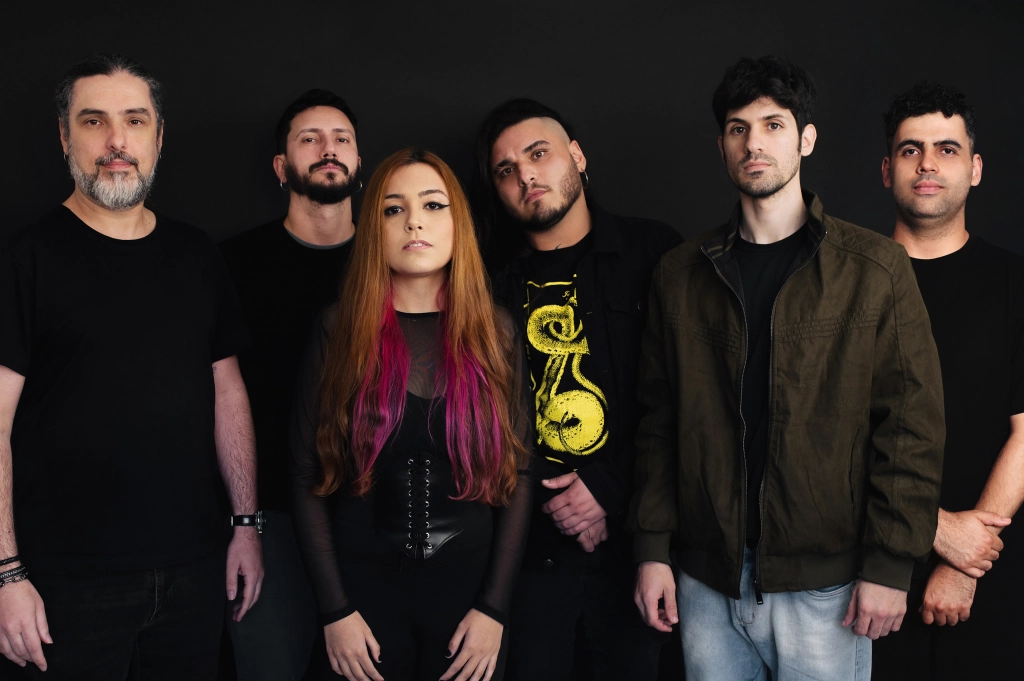
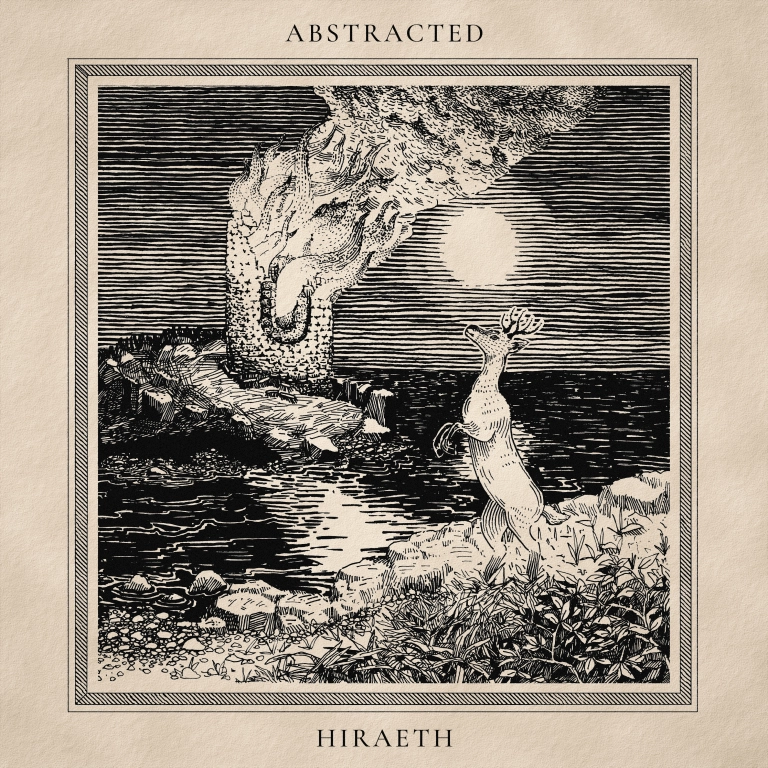
Brazil’s ABSTRACTED have never been a band interested in technical excess for its own sake, but with Hiraeth they sound more focused, emotional, and confident than ever before. The album still carries the complexity and weight expected from modern progressive death metal, yet beneath all the shifting structures and dense arrangements there’s something far more human holding it together: atmosphere, tension, melancholy, and restraint. I spoke with José Consani about lineup changes, emotional weight in heavy music, overproduced modern prog metal, and why Hiraeth became the most honest record ABSTRACTED have made so far.
Hi! First of all, did something change inside ABSTRACTED after Atma Conflux?
Hi! Yes, actually, we went through some major lineup changes. From the Atma Conflux era until now, only two founding members have remained in the band: Riverton (now living in Germany) and Rosano. Fernando, Carol, and me [José] joined shortly before Atma was released, and Leonardo came in a few months before we started the recording sessions for Hiraeth.
A lot of progressive metal bands today throw technical parts everywhere but forget to write actual songs. Hiraeth feels more controlled even when it gets chaotic. Were you trying to cut away some of the excess this time?
Yes, definitely! I’m glad you said that because that was exactly one of our goals with this album: to create something cohesive and emotionally engaging, an album people would genuinely enjoy listening to because of the melodies, atmosphere, structure, and everything else we could use to communicate with the audience beyond just technical ability.
We tried to treat technical sections as just another tool for building the musical narrative, using them only when they truly served the song instead of making them the core of the composition.
The opener, “Axis”, goes past nine minutes, but it never really feels bloated. Meanwhile, a lot of modern prog bands can barely survive four/five minutes without repeating themselves. Did you approach songwriting differently on this album?
Actually, we never really thought about song length during the writing process. The length came naturally from the number of ideas each song apparently demanded.
Maybe that’s the point where a long song either succeeds or fails. If you’re writing a nine or ten-minute track just because bands like Dream Theater did it a lot, your chances of losing focus become much higher.
At the same time, while “Axis” ended up over nine minutes long, songs like “Languish” and “To Quench” said everything we needed to say in around five minutes. And that’s completely fine.
The album moves from total chaos into almost calm, jazz-like moments without sounding forced. That kind of transition usually sounds terrible when bands overthink it. How do you stop the music from turning into pure “prog exercise”?
Well, I’m afraid we don’t really have a formula for that either [haha]. It’s actually really nice to hear you say that, especially because it wasn’t something we approached in a calculated way.
I think the reason is pretty simple: we don’t add jazzy interludes just because other bands are doing it. We’re not trying to sound cool or follow trends. We genuinely listen to a lot of jazz, we love that language, and progressive music gives us the freedom to incorporate all those influences naturally.
Creating contrasts and different atmospheres was something that came very organically during the songwriting process, and those jazz-influenced sections fit perfectly into that dynamic.
Everyone in Abstracted comes from a different musical background, which gives us a very broad range of influences. I think that helps us blend ideas together in a more organic way.
Brazilian metal is usually associated with aggression first, but Hiraeth feels much colder and more introspective than most extreme metal coming from South America. Does where you come from still shape the music strongly?
Absolutely. There’s no doubt about it.
South America has always dealt with deep social and economic issues, and that obviously shapes people’s perception of life. Heavy music can be a powerful way to channel rage and frustration without directing it toward anyone in particular.
But anger isn’t the only emotional response that comes from living in that reality. Introspection, melancholy, and reflection can also emerge from it and I think that’s more where we are now.
We’re not that young anymore, and rage eventually gave way to a different kind of awareness. Something denser, more melancholic, maybe. And I think our music carries much more of that atmosphere today.

There are clear influences here, Opeth, Between the Buried and Me, Vildhjarta, but the album doesn’t feel like worship. Were you consciously trying to move away from sounding like your influences?
I don’t think it was a conscious decision to move away from our influences. As I mentioned before, we have a very wide range of inspirations, and they naturally find their way into the music.
In the end, we were simply trying to create something that sounded exciting and meaningful to us. Of course, bands like Opeth, BTBAM, and Vildhjarta are important references and you can probably hear traces of them in the album, but there were many other influences shaping the process as well — and I think that helped us avoid sounding like a mere imitation.
A lot of newer progressive metal sounds almost too polished emotionally – technically impressive, but hard to connect with. Hiraeth still feels human underneath all the complexity. Was that something you thought about while recording?
Yes, definitely. As part of our pursuit of a more organic atmosphere, we made some very deliberate decisions during both the writing and recording process.
Technical exhibitionism, excessive editing, endless layers of effects — none of that was really our priority this time. We just wanted to create songs that felt emotionally honest and genuinely connected to what we were experiencing.
Looking back now, I think we were basically asking ourselves: “If Hiraeth were an album by another band, would I actually save it to my Spotify library?”
That was the real question behind everything. And maybe we’re simply not drawn to that overly polished, pasteurized kind of sound.
Some of the clean passages on this record feel almost uncomfortable because they appear right after really dense or violent sections. Do you enjoy throwing listeners out of balance a bit?
Yeah, maybe… [hahaha]
You know, I have two different images in my mind when I think about tranquility after chaos.
One is the classic idea of calm after a storm: the chaos slowly fades away, the sun comes back out, and everything starts feeling safe again.
But the other image is closer to something out of Melville, like fighting a monstrous white whale that suddenly disappears beneath the surface. Everything becomes silent and still, but instead of relief, there’s tension. You can barely breathe because you know nothing is actually okay. The creature is still there just waiting for the right moment to emerge again and destroy everything. [haha]
I think that’s probably what our clean sections feel like. They may sound calm, but there’s still a lot of density and tension underneath.
So yeah, I think you captured that contrast really well. But once again, it wasn’t something we consciously planned; it was simply what felt right for the songs.
The word “hiraeth” itself carries this feeling of longing for something impossible to return to. Where did that idea connect with the band personally?
Well, I think we all carry something in our lives that once made us feel safe and comfortable, a place where we truly belonged. Maybe it’s a single happy moment from childhood, someone important who is no longer here, or just that comforting sense of innocence, when everything seemed possible and we felt protected by something bigger than ourselves.
We grew up and eventually became wiser people, but that wisdom came as a consequence of an entire life struggling through deep issues and feelings of loneliness. Learning how to deal with that while still moving forward on this path of self-development is probably the real ning and beauty of life.
But sometimes we just get tired, and all we want is to feel that again: a place that feels like home, where we can still find warmth and safety. A place where we recognize ourselves and reconnect with our purest essence.
Maybe that’s just a middle-age crisis. [hahaha]
Reviews of the album keep talking about the technical side, but honestly the atmosphere feels more important than the musicianship most of the time. Does it ever annoy you when people reduce progressive music to skill alone?
Annoyed? Maybe not. I think people connect to music through many different aspects, and that feels completely natural to me.
For example, a young guitar player struggling to improve their picking technique will probably pay close attention to the technical side of their favorite bands. I was that guy once too, and that’s a very real kind of connection. It’s part of the process.
So it wouldn’t make much sense for us to play a genre that naturally demands technical precision and then feel frustrated when people notice that aspect of the music.
But at the same time, technicality was never our main goal with Hiraeth. I completely agree with you about the importance of atmosphere. More than anything, we wanted to create songs with layers, music that could offer different points of connection depending on what each listener is looking for emotionally or musically.
And of course, it’s very rewarding to realize people are connecting with the album through many different dimensions beyond just musicianship.
The production sounds much more natural than a lot of modern progressive death metal records now. The drums especially still breathe instead of sounding completely machine-fixed. Were you tired of hearing overedited prog metal albums?
Oh, absolutely! [haha]
At some point, a lot of records started sounding almost identical to us. And I don’t think that’s an issue exclusive to progressive death metal — every genre eventually reaches a point where its own aesthetic becomes oversaturated.
Maybe modern metal got there a little faster than expected, and we simply felt the need to move in a more organic direction.
For example, we intentionally kept small imperfections in the performances, used real amplifiers, avoided overly processed and hyper-compressed guitar and bass tones, and tried to preserve the natural sound of the drums as much as possible throughout the mix.
And we’re really happy with how that turned out.
Progressive metal has reached a point where almost every band claims to be “genre-defying”. Do you think the scene sometimes disappears too far into complexity and loses its identity?
Yes, I think that can be a very accurate observation.
Modern metal somehow disrupted the more gradual line of evolution that heavy music used to follow and suddenly introduced a completely fresh way of writing riffs, structuring songs, and approaching rhythm, all with a huge sense of personality.
Naturally, everyone wanted to create something that felt as exciting and distinctive as that.
But maybe that’s exactly where the problem begins. When a musical language has such a strong identity and such a powerful gravitational pull around it, there’s always a risk of becoming trapped by it instead of truly expanding beyond it.
Songs like “The Barren Grave of God” feel emotionally heavier than physically heavy. Do you think emotional weight hits harder now than pure brutality?
For us, definitely.
If I had to describe Hiraeth in a single way, I’d say its emotional core is really the central force behind the entire album.
Even the heaviest songs and the most aggressive passages exist there for expressive reasons, at least from my perspective. The brutality is never just brutality for its own sake, it’s always trying to communicate tension, exhaustion, grief, rage, or other inner states.
And I think that underlying thread is probably what gives the album its sense of cohesion as a whole.
Progressive music used to feel risky because bands sounded unpredictable. Now even chaos can feel formulaic. Is it harder today to genuinely surprise people with extreme music?
Probably, yes.
If your main goal is to become “the next original extreme metal band,” then you’ll probably end up with a huge problem. At this point, music has already explored so many different paths that the obsession with novelty itself can become limiting.
Fortunately, that was never really our concern while making Hiraeth.
We weren’t trying to surprise people or reinvent progressive metal. We were simply writing songs that felt meaningful to us, songs we genuinely enjoyed creating and listening to ourselves.
And honestly, I think that kind of visceral honesty during the songwriting process can sometimes be far more impactful than forcing yourself to come up with an artificial sense of innovation. Maybe the real surprise today is simply making something sincere.
Looking back at the eleven years behind ABSTRACTED, does Hiraeth feel more like an arrival point – or the first album where the band finally sounds the way it was supposed to sound from the beginning?
That’s a very interesting thing to think about.
Honestly, I’m not sure there’s really such a thing as an “arrival point” in this case. If you look back eleven years ago, we were completely different people, different perspectives, different tastes, much less life experience, much less musical experience.
So maybe the version of ABSTRACTED that existed back then sounded exactly the way it was supposed to sound at that moment. The same goes for Atma Conflux. And maybe a few years from now we’ll look back at Hiraeth as some kind of transitional work leading into another phase entirely.
I actually like thinking about it that way.
But at least right now, Hiraeth feels exactly like the album we hoped to create.
Thank you!
And thank you as well for listening to the album so carefully, for your sensitivity, and for such thoughtful observations and questions.
Best regards,
José Consani.

https://abstractedmetal.bandcamp.com
https://instagram.com/abstractedbr
https://facebook.com/abstractedbr
Share: